
executive PROfiles
Read personal histories of industry pros, how they started out in the business, what they do now and valuable advice they have for students pursuing a music career.

Introduction
This public section showcases a series of Executive PROfiles—career spotlights of many who work with music data and research in different ways. They share their own real-world stories about what led them to pursue their careers, what a day in their lives is like, how they use research in their jobs and their advice and suggestions to students or those looking to get into the business.
With more than 1,100 pages of content and more than 1,000 sources, The Metrics of Music shows the many types of media, tools of the trade and myriad ways creatives and industry pros utilize data, analytics and various resources to measure artistic performance, interpret audience behavior, and learn how information is used to advance their priorities.
To request access to The Metrics of Music, click on “Free Access” in the top menu and fill out the form on that page. We’ll review your request as quickly as possible.
We hope you’ll enjoy reading these PROfiles. Listed alphabetically, below are interviews with:








From Math to Music: Casey Campbell
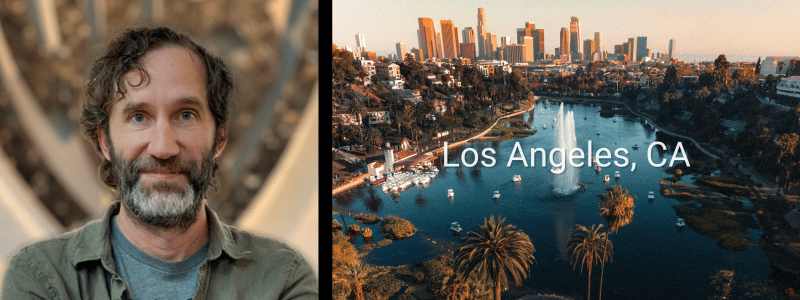
Parlaying analytics skills with visualization platforms in ways few on the creative side had contemplated, Casey was promoted in 2016 to Sr. Director/Research & Intelligence for Warner Records, and today is Sr. VP/Research & Analysis. Virtually every department in Warner’s Los Angeles headquarters—from A&R to marketing—relies on Casey and his hand-picked team of qualitative/quantitative associates to study the numbers, objectively assess opportunities and project outcomes based on how certain investments of time and resources are deployed. That could involve how much stock to order, how to negotiate what an artist’s deal points might be, how to persuade an artist that your label is better for them than a competitor, and so on. These kinds of strategic decisions show that far beyond knowing the numbers, Casey brings an eye for business opportunity, and that’s music to the ears of everyone he and his colleagues work with.
While taking a business statistics class in college, I was partnered up with an older classmate. We started talking about music and going to some shows together. When spring came around, he said, “I’m graduating and would love to intro you to replace me in my internship.” I needed one, and it would also mean having one less class to take. It turned out to be with Warner Music Group, doing local promotion, sales and marketing activations across the labels at the university, including our radio station KFSR, as well as stock checks at the local Tower Records store, Target, Best Buy, FYE and other retailers in the area. We had O.A.R., My Chemical Romance, Avenged Sevenfold and others blowing up at the time, as well as the Vans Warped Tour coming through town. I thought, “This is way cooler than working at some other internship.” I loved it, and have never left the company.
Putting Your College Skills to Work
When I went to work for Rick Orr in 2005, iTunes and Amazon were being facilitated by the West Coast sales arm, so I was assisting with their sales reports as those businesses ramped up. I had minored in mathematics and was a tutor in math and finance while at Fresno State and earlier at San Joaquin Delta College. I’m a computer nerd at heart, and even in one of my part-time jobs at age 20 I was building a database for inventory management in picking/packing/shipping logistics. So when I got to WEA, I started to overhaul a lot of the reporting and automating a lot of things that were being handled manually. They saw how I was able to reduce a job that previously took all day to 30 minutes, and I was able to pull out data that they hadn’t looked at before because it was hard to do.
They said, “Casey, you need to take on a kind of information manager/research role for us.” That opportunity turned into becoming a part of the centralized research and analyst team out of New York. I began to help to facilitate automation and using a lot of statistical analytics I’d learned in college, such as IBM’s SPSS and the integrated Microsoft Excel Data Analysis Toolpak that does ANOVA, T.TEST and correlation coefficient calculations. My boss at the time, then-WMG Sr. VP/Research & Analysis Alan Triger, began to integrate me into a lot of special projects, which took all over the world, uncovering things, making processes more efficient and documenting what we should be looking at. I developed global-based account reporting systems, such as studying Spotify and Apple holistically across different markets. I got really into it, helping the IT department and building better databases such as our Big Data repository, along with data mining, consumer analysis and consumer profiling.
When I was at corporate, which was very business- and financial-focused (as were Universal Music Group and Sony Music), there was a lot of work involving deal modeling, futures and very logistical issues such as orders, shipments and returns. You’re looking at everything in terms of debits and credits, with everything revolving around numbers.
Making Better Decisions to Make a Difference
When I transitioned to the labels, I was the first hire under then-Warner Records GM Larry Mattera (now Capitol Records GM and EVP/Capitol Music Group). I realized there was a problem: a lot of that information and knowledge wasn’t getting back to the labels, which then wasn’t getting back to artists and management. I thought, “Holy crap! We could make better decisions on the fly in sales and marketing meetings.” An unbiased perspective is integral for day-to-day decision making, and it was important to show that information to artist/manager conversations because if they said “no” to something, things weren’t going to happen.
By the late 2010s, the finance department still looked at figures, of course, but now there was all this data about followers, engagement, streaming and sales that don’t necessarily materialize to financials when you’re talking about SoundScan. Because we get paid on shipments, not on scans, there were situations with retailers where we could get returns on CDs and start seeing negative numbers.
“It was hard being the one in the room with a neutral, Switzerland perspective. But my purpose was singular: to get as close to the truth as possible.”
I started bringing almost non-financial analytical terms to a lot of the company departments to frame up what our KPIs (key performance indicators) and OKRs (objectives and key results) should be day-in and day-out. That is, what looks healthy and what isn’t, outside of whether we were in the green or in the red, as finance would view it. A big part of taking this approach involves having the ability to test and measure along the way.
Having started out as a young kid from corporate and not from the label side, I didn’t understand the full functionality of what a label does, so there was a bit of a learning curve for me. At first, when meeting with all these creative people as the sort of “czar of data information and knowledge,” there often was a lot of standoffishness, as they were protective of their artists and albums. That’s to be expected because, in fact, they were paid to advocate for their positions. Still, it was hard being the one in the room with a neutral, Switzerland perspective, coming at it from numbers, probabilities and gap analyses. But my purpose was singular: to get as close to the truth as possible. I wouldn’t be one to say the music was good until the public started consuming it.
Weaponizing Data
The commerce team and consumption folks loved it, as they could get direct feedback. But for the marketing and creative departments, it was a tough pill to swallow. Some tried to weaponize the information, while others realized I could be an ally and started to learn how to use it.
What would be a good deal on both sides to get artist XYZ? How much do we need to spend on marketing to achieve that artist’s potential? Answering those questions involves evaluating the artist’s current following and whether there’s a larger audience we could unlock, perhaps even crossover appeal from one genre to another, such as Dasha, or in terms of physical sales, such as with Billy Strings. They are good examples of how our forecasting models began to change the ways we constructed deals and developed talent.
“Rather than taking a cookie-cutter approach, we began using insights on artists’ actual fan bases, their behavior and demographics.”
Twenty years ago, we would blow hundreds of thousands or even millions on projects. An artist video could look amazing, but at a cost of $400,000 we might or might not make our money back. If not, the original thinking had been, “That’s all right. We tried.” This evolved to a much more businesslike orientation: “Hey, guys. That’s not working. Let’s turn the water faucet off there and point it over here, where something is garnering impression volume, a larger stickiness factor, a better click-through rate, a better ROI.” Strategies we could alter over the course of campaigns and artist careers across marketing, commerce, A&R, radio promotion and tour marketing.
The End of the Cookie-Cutter Approach
This shift even impacted product development. Rather than taking a cookie-cutter approach, we began using insights on artists’ actual fan bases, their behavior and demographics in developing pricing elasticity. For example, some artists’ core fans have a higher average household income and are willing to pay X amount for a special product or, conversely, have a lower average HHI and aren’t necessarily interested in something like a premium T-shirt. We started integrating all this information into every conversation, which has helped us make smarter decisions.
“Everyone needs a core competency in how to understand data information and use it appropriately.”
In college, there needs to be a kind of “moralistic” class on how to and how not to weaponize data because it’s a blessing and a curse in a lot of cases. A course like that is a needed aspect of the business because it’s one thing I wasn’t taught; you either learn by doing or from other people.
With AI and machine learning we have so much data already, and there will only be more generated going forward. Everyone pursuing a career in the music business needs a good foundational grasp and a core competency in how to understand data information and use it appropriately.
Radio Promoter: Rob Dalton
When I was in sixth grade in Nashville, I wanted to be a sax player, as that’s the coolest instrument in the school band. But my dad pushed me toward the trombone, which I later found out he did only because that was the instrument the band needed someone for. So through high school I played trombone, then piano, too, and started a band. So many people in Nashville are connected to the music business one way or the other. It turns out that the mother of a buddy’s girlfriend worked at Ronnie Milsap’s recording studios, and so I asked if I could visit. When I walked in, I thought, “I don’t know what this is, but this is what I want to do!”
Fascinated with engineering and recording, I enrolled at Middle Tennessee State University in 1985 as a Recording Industry Management major with a minor in Engineering and Business Administration. Along the way, I opened myself up to other aspects of the industry and thought about going into entertainment law. While preparing for the LSAT the summer before my senior year, I was looking for an internship. A professor knew the coordinator in the A&R department at CBS Records, and they created their first-ever internship for me. Since the job was new, the label staff didn’t know what to do with me. I just explained I was a student and would work for free all summer doing whatever they wanted. I noticed a mountain of cassettes sent in by songwriters and publishers and volunteered to catalog it all. “Great!” they said. I asked where I should sit to get started. “Um, we don’t have a place available for you.” So I went to the album closet and set up my first office there with an extra chair and unused table leaf.
“What you’re trying to accomplish when you start out is to build your credibility—your viability.”
When the job I really wanted—as A&R coordinator—came open, it went to the mailroom guy. But that meant there was still a new opening, so when the company offered me his mailroom gig, I jumped at it and finished my degree at night.
As far as starting in the mailroom, here’s what I discovered: The beauty of starting at the rock bottom of a position is incredible, because it allows you to really learn what you need to know before you’re tasked with actually doing something that’s going to affect people’s careers for the rest of their lives.
Things Happen Fast in the Music Business
Just a year later, that same CBS Records A&R coordinator post opened up. I figured I had a good shot this time. But there was a second opening—a new job called “promotion coordinator.” Even though I was in the mailroom, I really didn’t know what that involved. Looking back, how could it be that promotion—the lifeblood of everything at a label—was something that no one at MTSU had taught us anything about? Not knowing which job I might get (if either of them), I applied for the promotion position, too. My resume was one paragraph: I had gone to college and worked in the mailroom. But somehow that was good enough to get me the promotion job, and I started as part of a small team under VP/Promotion Joe Casey and National Director/Promotion Jack Lameier.
I must admit that in the first eight months I was horrible at it. Jack’s handwriting was messy, like a doctor’s. He told me he wanted a letter faxed to all of Country radio. So I faxed out his chicken scrawl exactly as he had drafted it. “No, college boy, you’re supposed to type it up on letterhead, make it look good, and then send it out!”
After eight months, I moved up to the newly created position of secondary-market promotion for Columbia and Epic, which meant calling on the Radio & Records trade publication panel of reporting stations. A year later, Sony Music bought CBS, and I was elevated to regional promotion for Epic. Jack was more than a boss; he gradually became a father figure to me. Working together for 12 years, we went on a run of hits where we didn’t miss much: Joe Diffie, Doug Stone, Collin Raye and picking up Patty Loveless from MCA, whose career with Epic really took off. We rose up to rank among the top three labels in town, and I was promoted again to national promotion.
“You never know what path you’ll take. The key is to find the one where you have the passion and the opportunity.”
In my new role, the first launch plan I had the privilege to set up was in early 1995 for “What Mattered Most,” the title track to the first album by newcomer Ty Herndon, produced by our VP/A&R Doug Johnson. It went great. The single became a monster, debuting at 45 in February after picking up more than half the R&R reporting stations in just its second week. “What Mattered Most” reached No. 1 on both Radio & Records’ Country chart and Billboard’s Hot Country Singles & Tracks chart.
Based on this initial success, Ty’s June follow-up, “I Want My Goodbye Back,” ranked No. 1 most-added and immediately charted out of the box, and was playlisted on 85% of the R&R reporting stations in just two weeks.
Then, in week three, everything went south. Ty was set to play a gig for the Ft. Worth Police Department. But before the show he was arrested for methamphetamines and solicitation of a male vice officer. The incident would forever change the trajectory of Ty’s career, as in the mid-‘90s, that news didn’t play too well at Country radio. Back in those days, if one or two reporting stations dropped a newer record, it was all over. In our case, we had a mass exodus of about 80 stations. It was my first intense experience with crisis control. But based on the pure strength of the record, we were able to cut those losses to 30, though “I Want My Goodbye Back” still lost its bullet for a week as the single moved up 31-30 on R&R. But eventually, we got every station back but one, and the single peaked top 5.
The Element of Surprise
I was elevated to Epic VP/Promotion, and spent about a decade running that department. Doing promotion means going beyond pitching for airplay, creating moments people will remember. I’ve always believed it’s important to make events bigger for those who weren’t there than for those who were. There’s no better way to do that than through the element of surprise.
At Epic I would create many events with surprises, but wouldn’t tell anybody—not the press, not even my staff, Jack—not anyone. When I couldn’t clear the 10-man Flying Elvi in Las Vegas to parachute in at an outdoor showcase for the Kinleys in Las Vegas for 220 radio program directors, I hired a pilot and stunt guys to dress up as Elvis and do it anyway. I got sued by the Flying Elvi for “trademark infringement” and was pretty down about it. I finally admitted to Jack what I’d done. He simply replied, “We’ve got a whole floor of attorneys in New York. Call them.” I did, and they answered, “You’re the Elvis guy? We’ve been having a lot of fun with this one!” Then our New York-based President/CEO Allen Butler came out to visit.
I quietly said, “You’re probably wondering about the Elvis thing.” Let’s just say Allen wasn’t happy. “You #E&%&@+! What in the world did that have to do with the showcase?” I explained how I wanted people to go home buzzing about the showcase. That’s the most powerful advertising there is. Well, the Elvis parachuters story blew up among those people who weren’t there. We collected 77 adds out of the gate and launched the Kinleys’ career: Top 10 and ACM Duo of the Year. They didn’t have staying power, but we gave them a shot. Jack was always patient with those antics. “How about roller-skating monkeys?” Remember, it’s all about the show …after all, it is show business.
When Sony Music and BMG merged, I left a three-year contract on the table to help start Asylum Nashville for Mike Curb, where for three years we had hits with LeAnn Rimes, Wynonna, Trick Pony, Blue County and Hank Willliams, Jr. By now I could see the inner workings of the record company business starting to change. I wondered if there was a way to break through with an artist without a label affiliation. That would rewrite the essential structure of what a record company is and the dynamics of how it functions.
To find out, I started New Revolution with partner Jeff Solima as an experiment to see what was possible. First up was Midas Records Nashville, which hired us to help with Canadian group Emerson Drive. Their single, “A Good Man,” was a chart fledgling somewhere in the 40s. We were able to take it top 15 at radio, all while setting up “Moments,” which became their first (and only) No. 1. The band became the first and only Canadian group to reach No. 1 on the US Billboard Country singles chart, and it earned a GRAMMY nod. That success taught us something, and our “experiment” lasted about 12 years.
But it's tough being an independent in the Country music business because breaking through with any record is pretty much against all odds. Once you take off that VP coat and no longer have that big corporate affiliation, you find yourself out there all alone … just you and the artist. We had to dig through the nooks and crannies of information to get airplay anywhere we could.
During this time, I wondered if there was a good time of year to ship a new single. I started monitoring the amount of singles traffic before the CMA Awards and the ACMs, when bigger artists are going to launch and take a lot of playlist real estate. Colleague Doug Brusa and I worked together on a linear progressive equation—the start and end date of every artist two singles back, to look for holes in the traffic.
It turned out there wasn’t a good time to ship a new artist from a traffic lens, but we were able to determine the add date for our competitors’ singles and their future releases. I’ve always been more of an analytic kind of thinker, and it was eye-opening to see that river of information below the chaos on the surface. I reasoned that if it could be quantified, it could be predictable. I had this revelation about writing software to turn data into a tool for record promotion. That’s how Spintel was conceived. Even though I wasn’t sure how to even make a Facebook post, I knew this was it.
As fate would have it, I ran into Lance Goodman, who owned a software development company. Lance coaxed Sage Audio mastering platform developer Johnny Baird to come aboard as CTO. To get some early feedback, we showed our Spintel prototype to renowned label executive Joe Galante. If anyone could shoot holes in it, he would. Instead, Joe shook my hand and said, “Congratulations. You’ve solved a huge problem!” Joe even became one of our first investors. But what we thought would take a year to build has taken five, mainly from software improvements and time needed for raising capital.
Taking the Extra Step
My advice to students pursuing a career in the music business is fundamentally simple: Don’t just show up. Be present when you’re there. Do the task, then one more step. Then repeat. Learn as much as you can, from the artist development process to consumption. You never know what path you’ll take. There are so many… I know. The key is to find the one where you have the passion and the opportunity. I didn’t know anything about promotion. What you think you want to do may change once you get inside and see things as they really are.
As head of a department team, I always looked for hungry go-getters. Volunteer for the things that no one else wants to do … and own it. What you’re trying to accomplish when you start out is to build your credibility—your viability. Someone they can count on who doesn’t leave things hanging.
Understanding problem-solving is probably the most important thing because there are problems all the time. You can either ignore them or you can try to understand and fix them. If somebody asks you if you know how to do something, just say yes. When I was in the mailroom, that was my mantra. “Know how to fix a 3/4-inch tape machine?” Yep! I’d tinker with it, and sometimes it would work. “Know HVAC?” I’d pull levers and push buttons. OK, one time I almost set the building on fire. But you get the idea. Go the extra mile. Embrace the challenge.
Musical Chair: Serona Elton

Destined for a Career in the Business
My passion for music came before anything else, and several key experiences influenced me quite early on. I grew up in North Miami. My father was in the television and film production field, and at one time had a television commercial production company. He had his office in the building that housed the world-famous Criteria Recording Studio. I remember being very young and sitting in the lobby one day, surrounded by wall-to-wall gold and platinum records, and watching out the windows as the Bee Gees got out of a limo in the parking lot. I was mesmerized and thought, “I want to be a part of this world.”
I was a dancer, studying tap and jazz, not a musician. But in my opinion, dancers have just as strong a relationship with music as musicians do. This was the first time I got a glimpse behind the curtain and realized there was more to music than just what I heard coming out of the speakers. The next major impact came with the release of “When Doves Cry.” That was my introduction to Prince, and he and his music had a huge impact on me and my view of music and life overall.
Not long after that, while I was a sophomore in high school, a very close friend and I decided we were going to be a successful female rap duo. We recorded a demo. I even registered our copyrights with the US Copyright Office. I shopped our demo to local labels, and we were offered a record deal, but did not sign it upon very good advice from a music lawyer. I came to terms with the fact I did not really have much musical talent and gave up the rapping (other than at high school pep rallies as a cheerleader). But I also developed a clear sense that I wanted to work in the music business somehow.
Work for Free, Have Lots of Fun
When choosing where to go for my undergraduate degree, I did not have sufficient access to information to know you could major in music business (there were only a few such programs at that time). So I studied for my BSBA with a major in finance, figuring that understanding how money worked could only serve me well since the music business, after all, was a business. I had limited funds, so a state university was my only choice.
While in college, I got my first part-time job by being willing to work for free. I was in a town that did not really have many opportunities to intern or work in the music business. However, this was the era when some local cable TV providers produced their own programs, and ours had two music video shows—one focused on R&B and one on hip-hop. The producer was an employee of the cable provider, but everyone else working on the shows, including the on-air talent and me, were volunteers. I wrote and delivered a music news segment on-air every week and set up interviews with the major acts touring through several nearby major cities. In many ways, I had more fun and met more interesting people while in this volunteer position than in many of my later years as an executive.
At the same time, I also held a paid part-time job doing something outside of the music business. The modern equivalent to what I did would be an unpaid internship. The lesson here is that if a paid opportunity does not exist, consider an unpaid internship if you will gain valuable experience and build your network while doing so. After I went to graduate school, I landed a paid part-time job due directly to the experience I gained while working for the two music video shows.
As I considered what I wanted to do when I graduated, I found out that the University of Miami had a Music Industry graduate program (before the school itself was called the Frost School of Music). I applied, was accepted, and everything fell into place. I could study the subject I loved while living at home to help with expenses.
Making a Positive Impression
I got my first full-time job in the music industry through a fellow student who graduated a year ahead of me. Thanks to another alumnus of the program, he landed a job at EMI Recorded Music North America in New York. He knew my overall goal was to work for a major label there. Timing worked out well and a few months after finishing my master’s degree, there was a job opening in his department. He recommended me to his boss, I interviewed, and landed the job.
The lesson here is about the impression I made on this fellow student. He knew from observing me in classes and on projects that I was a very hard-working, detailed-oriented, smart go-getter. He was willing to put his reputation on the line with his boss in recommending me for the job.
Fulfilling another long-term goal, I attended Brooklyn Law School as a part-time night student while working full-time at EMI. Looking back, my career path appears far more intentional than it felt at the time. Rather than following a predetermined roadmap, I progressed through a series of opportunities that aligned with my preparation, interests and careful decision-making.
A Dream Come True
Receiving the first-ever Music Business Association Educator of the Year was a tremendous honor. So many people working behind the scenes in the music business make a significant impact, but will never have an opportunity to receive an award because one simply does not exist related to the specific type of work they do. That was true in the field of music business education until very recently.
When I first heard that the Music Business Association was creating the new category, I felt a strong sense of validation on behalf of the entire field. The music business is quite young as an academic discipline compared to others like philosophy or math, with the earliest program debuting in the late 1940s, and the second (the one I now run) launching in 1966. A handful of other programs were established in the following decade, and the number has continued to grow ever since.
“I am a product of and a zealous advocate for music business education.”
It has taken many years to achieve broad awareness among those working in the music business that this is an academic discipline that students can study as a major or minor. While it is true that you do not need a music business degree to work in this field, unlike accounting, law or medicine, a music business degree provides a structured foundation that helps students understand not only how the different sectors work (publishing, records, live), but also how the many interconnected parts of the industry fit together. I am a product of and a zealous advocate for music business education.
Receiving that award was a dream come true for me personally. While none of us knows what our ultimate legacy will be, this award, combined with directing the oldest program included on the Billboard Top Music Business Schools list, and taking over the authorship of the Music Business Handbook and Career Guide textbook, reassures me that my efforts have mattered and may leave a lasting influence on the field and the people it serves.
Combining Multiple Talents Into A New Role
I have a long history with respect to working in mechanical licensing and royalties, and music industry data and systems management. I gained over 22 years of experience in these areas through my roles at EMI and Warner Music Group, and consulting work at Sony Music and Universal Music Group, before joining the team at The MLC. As someone working in mechanical licensing, I remained well-informed over the years of developments in the field.
The idea of something like what is now The MLC was floated a long time ago. Click here to read something written in 2005 about it by the Register of Copyrights at the time. I admit to having had an interest in being a part of any sort of collective mechanical licensing solution going as far back as 2002. While working at Warner, I met and got to work closely with Kris Ahrend, who would later become the CEO of The MLC.
The Music Modernization Act (MMA) was passed in late 2018. In 2019, processes unfolded resulting in the appointment of The MLC by the US Copyright Office, and the need to hire The MLC’s CEO, which Kris became in early 2020. It was very clear to him that The MLC had a critically important task ahead to educate rightsholders about what The MLC is, what digital mechanical royalties are, and what rightsholders need to do to receive their royalties.
Kris had the foresight to create a role at The MLC focused on the creation of educational materials and programs. Knowing my unique combination of extensive experience in this industry segment and 14 years as an educator at that time, he and I collaborated to bring it to life. I was among the first group of leadership hires, joining at a time when many of the organization’s key functions and strategies were still taking shape.
Go Pro
Joining professional organizations is an important part of career development because it connects you with the broader community of practitioners, leaders and emerging trends within their field. These organizations provide valuable opportunities for networking, continuing education, mentorship, professional recognition and access to industry resources that can help members grow throughout their careers.
Participation also demonstrates a commitment to professional excellence and lifelong learning, while creating opportunities to contribute to the advancement of the profession through service, leadership, advocacy and the exchange of ideas.
“Joining professional organizations is an important part of career development.”
Ultimately, involvement in professional associations helps you stay informed, expand your professional networks and play an active role in shaping the future of your field.
As a student, start by getting involved with groups like GRAMMY U and your own school music business student association if there is one. And then once you graduate, explore the many different professional associations connected to the specific sector of the industry you are working in.
Perpetual Learner: Emilie Gilbert
With a love of country music, Emilie moved to Nashville for an internship at a respected Music Row startup that led to eight years during Label Analytics at Sony Music. Today, she is Manager of Insights & Fan Engagement Strategy at G Major Management, which represents renowned singer-songwriter Thomas Rhett.
I grew up listening to pop and hip-hop, but my mom listened to country radio and introduced me to a young singer-songwriter, Taylor Swift, whose lyrics she thought I could relate to. (Her advice was spot-on.) I didn’t have an iPod at the time, so waiting to hear Taylor on the radio, I learned other country songs and artists such as Brad Paisley and Kenny Chesney. I enjoyed the storytelling, humor and charming lifestyle they brought to life in their music. I was hooked!
My junior year at Whitman, I started mapping out my plan for after college. I didn’t love the idea of sitting at a desk from 9 to 5, but ultimately, I wanted to utilize the education I was working really hard to get. It was just a matter of finding a field I was interested in and matching that with my Economics degree. At the time, I found myself procrastinating studying by researching country music: writers, new artists, managers, companies, etc. I didn’t know all the roles and positions that make the music business happen, but I knew there had to be teams behind the scenes. So moving to Nashville became the goal!
The Power of Industry Information Resources
Back in 2012, the music industry was not public-facing online. Many managers, agents and label professionals didn't have social media profiles, so you really had to dig to find any information. I also didn’t have any contacts or relationships at this point, so Music Row magazine was a great resource. I applied for several job openings that were ultimately all dead ends, especially because I hadn’t graduated or moved to Nashville yet.
In my search I found the press release for a Nashville event hosted by Google for Creators, where Ashley Monroe had performed. I looked up the company behind the event and came across a startup called FLO Thinkery . I applied for an entry-level role and got an interview. They liked me, but not for that position, so they said, “Please stay in touch.” I was devastated to have to move back home after college, not knowing where to go next. Ultimately, after I spent that summer as head chef at Tumbling River Ranch in Colorado, FLO called me back, offering an internship in the fall of 2013. So, I drove to Nashville and rented a room on Craigslist.
At FLO, I began working with the most incredible leadership team who mentored me and still are among my favorite people, including Mark Montgomery, Gavin Ivester and Melissa Preisler. They built companies for artists and had just launched Kenny Chesney's Blue Chair Bay Rum. Very quickly, many other artists wanted their own brands, too, so I researched fan base demographics, purchasing habits and consumer product trends, which were used to inform those creative and data-driven decisions. Being business-minded has always served me well, but that experience gave me confidence in data analytics, albeit originally in a very untrained way.
Cultural Differences between Start-Ups and Corporate
After a few months, the internship led to a full time job at FLO handling Insights & Strategy, which was interdisciplinary. I loved the team learning environment where nobody stayed in one lane; you had to be agile going into a variety of verticals such as a non-profit and a bank. At FLO we also were a resource for Project Music at the Nashville Entrepreneur Center; it was another great learning opportunity in the first years of my career.
After my first year, FLO started to have growing pains, which meant more responsibility and more personal development for me. When FLO eventually shut down, I was fortunate to have networked with the newly appointed regime at Sony Nashville, Randy Goodman and Ken Robold, and started as a Senior Analyst in 2016.
“Different executives, colleagues and artists all have different appetites for understanding the data and utilizing it in decision making.”
It was a huge learning curve to shift from a startup culture to a very corporate structure where everybody had a very specific role and responsibilities. Coloring outside those lines was challenging, but ultimately building relationships across departments created a great team and culture to launch new artists. I’ve been very fortunate to be involved in several artists’ careers from their beginnings, such as Kane Brown, Old Dominion and Luke Combs.
As streaming became the largest revenue source for recorded music, with it came a plethora of data in comparison to the purchased-music era. Sony had excellent resources and on-the-job training to develop that skillset allowing label analysts to marry the needs of the frontline label teams with the KPIs and insights from the data.
Adding Value to Decision Making
Especially now, working on the management side, it’s a balancing act of having all the un-bias data and information overload. Different executives, colleagues and artists all have different appetites for understanding the data and utilizing it in decision making. So, knowing your audience is crucial, and those conversations or presentations ultimately increase data literacy across the music business.
Another key area is data analytics’ role in signing artists. At G Major we really want to utilize the entire spectrum of artist, opinion and data. It’s been a fun challenge learning how the team approaches new signings and what that process is like; it’s very hands-on and involved for management.
“I really value the ‘always be learning’ mindset because it fuels my career growth.”
We are at such a fun and uncertain time in the music business because the fans hold the power to choose what becomes popular. That, and the barrier to entry for being an artist and growing a fanbase is very low. It has created intense competition for fans’ attention and diminishing fan loyalty. Getting an artist’s narrative and music to cut through is a challenge, and there is no one formula.
Additionally, social and streaming apps and user behavior is always changing. It is so important to understand when those shifts are happening and take advantage of the opportunity. Relying on “what worked before” doesn’t translate over time in this rapidly moving marketplace. If you’re not continuously learning and willing to test new ideas, your career opportunities will narrow. I really value the “always be learning” mindset because it fuels my career growth.
Working with G Major, a new challenge this past year (2025) is managing Thomas Rhett’s fan club The Home Team, where we have a very sizable fan database. That fan relationship as a whole and one-to-one is incredibly valuable for his business. Owning that relationship fosters more loyalty and consistency with his fans. This integrates as part of a larger plan with his social media content, music release strategy and tour.
Build and Leverage Your Relationships
A unique opportunity of Nashville’s music industry are the great networking communities we have, such as SOLID (Society of Leaders in Development) and WMBA (Women’s Music Business Association). These organizations meet regularly and offer a lot of cross-industry education to their members with guest speakers. It was exciting and inspiring to hear Sony Music Publishing CEO Rusty Gaston’s and (future boss) G Major Management founder Virginia Bunetta’s own stories of how they got into this business.
Additionally, leveraging your relationships can be very helpful in problem solving. For me, that means people who know data tracking, social media, first-party data and various platforms, etc. such as CMA Sr. Director/Business Strategy & Insights Michael Farris and former Sony Nashville colleagues Ed Rivadavia (now SVP at mtheory) and Jaime Marconette (now SVP at Luminate; see his own Executive PROfile).
Many young people in the music business have relied on mentorship and the willingness of colleagues to have a coffee or lunch and give guidance without any “ask” involved for an internship or recommendation. Get on LinkedIn and reach out to people who are a couple of years ahead of you and ask about their experience. Do they like what they do? How did they get started? What’s worked for them? Are they looking to pivot to something else? They’re going to be a peer of yours in the business eventually, and they’re also the first to know when a job opens up. If you’ve already made some great connections and shown people who you are, that can go a long way. If you’re still in school, start building your network now. There’s no reason to wait!
Keeper of the Music Scorecard: Deena Hollander
The community of professionals who take the pulse of consumer interest in songs includes Deena Hollander, whose company helps radio stations, networks and program suppliers in the US test their music libraries with their aptly named “Scorecard” service.
After graduating with a BA in Communications from UMass Amherst, Deena joined market research firm Edison Research (now SSRS) in New Jersey as Project Coordinator. After a year, she was promoted to Manager/Music Research, rising over 16 years to Sr. Director/Research and VP. Working with both US and international clients, Deena organized focus groups, handled complex research projects and managed client communications.
With that experience, in 2016, Deena launched Advantage Music Research, which recruits carefully screened panels of the general public in various cities to register their responses on popular music and answer perceptual questions. Working with many major radio companies, the firm also tests nonmusical audio content and video clips. (Is Journey’s ubiquitous 1981 smash, “Don’t Stop Believin’,” as popular as ever? Learn more about how AMR works and see an example of one of their music tests in the Audience Research section.)
I’ve always loved music and listening to the radio, but I had no idea that a career in music research even existed. When I graduated college and began my job search, I initially thought I’d go into marketing. But I came across an ad from Edison Research that immediately caught my attention. It simply asked, “Do you like radio and music?” It felt like it was written for me because it combined my passion for music with my interest in understanding audiences and data.
I went in for an interview, learned about the role and the industry, and was instantly intrigued. I had never heard of music research before, but from that moment, I knew I wanted to be part of it. I decided to take a chance, and it turned out to be a perfect fit.
One of the perks of working for a small company first is learning to do everything for a project from A to Z. Edison and others I’ve worked for have all helped me to really understand the entire music testing and survey process. At larger companies, you don’t always get that full hands-on experience.
Over time, I noticed a gap in the market research industry: radio stations were struggling to access high-quality research at an affordable price. While many companies offered radio research, most operated as full-service agencies, resulting in higher fees due to extensive analysis and customized presentations.
“One of the perks of working for a small company first is learning to do everything for a project from A to Z.”
At the time, few companies were offering online music tests, which gave me a unique opportunity to fill that need. By conducting music tests online instead of in-person, we believed we could deliver the same valuable insights while significantly reducing costs for clients.
Today, on most days, I check in on current studies in the field and keep clients updated on their research. I’m also focused on sales and marketing, continually looking for new ways to ensure we deliver the highest quality research and service to our customers.
“I’ve especially appreciated mentors who encouraged me to think strategically … stay adaptable … and maintain a strong focus on quality and integrity.”
I’ve learned a lot from many people throughout my time in the music research industry. Whether it’s a co-worker, business partner or client, I always value the insights and feedback they share about my work and processes. Each perspective has helped shape how I approach research, client relationships and business decisions.
I’ve especially appreciated mentors who encouraged me to think strategically, stay adaptable as technology and listener habits evolve, and maintain a strong focus on quality and integrity in the data we deliver. Their guidance has had a lasting impact on both my professional growth and the way I run Advantage Music Research today. When I first started working right out of college, my main focus was simply earning a steady paycheck. Looking back nearly 30 years later, I’m proud of how far I’ve come: the experience I’ve gained, the knowledge I’ve built and the growth of the company along the way.
“Stay open to unexpected opportunities—you never know where they might lead … sometimes the most rewarding paths are the ones you didn’t plan for.”
I have always loved the friendly, relaxed culture that goes along with the music industry. There are great opportunities to go to conventions like the Country Radio Seminar (CRS) in Nashville, where you can see up-and-coming artists perform, as well as well-established artists. Once at CRS I met Kenny Chesney, and have a picture of the two of us hugging.
Follow your dreams, but stay open to unexpected opportunities—you never know where they might lead. The music and media industries are constantly evolving, and sometimes the most rewarding paths are the ones you didn’t plan for. Every experience, even those outside your original goals, can teach you something valuable and help shape your career in ways you can’t foresee. Be curious, take chances and never stop learning. You might just discover a passion or talent you didn’t know you had.
Consultant/Researcher: Kenny Jay

During elementary school in Milwaukee, I learned how to hustle, using my parents’ new stereo system to convert everyone’s eight-track tapes to cassettes, which were becoming more popular in cars at the time. This became kind of a cool party trick, and word spread quickly how the kid who delivers your newspaper can also dub over your eight-tracks to cassettes. It was a nice little business!
When I was in high school, we moved to a suburb in Chicago. I took an internship at nearby NBC affiliate WREX-TV/Rockford and sat in the newsroom next to baby-faced college graduate Bret Baier, who was a reporter there. Bret, of course, is now the chief political anchor for Fox News and hosts Special Report with Bret Baier on the network. I pulled news and police reports off the fax machines for the 5 o’clock telecast.
"Working in radio and music was what I wanted to do.
I never looked anywhere else; this was always going to be my plan."
It was really fun, but a radio internship during my senior year turned out to be exactly what I hoped it would be. The combination of my love of music, the love affair our cities had with radio, and their bigger-than-life celebrity talent I listened to while growing up made me realize that working in radio and music was what I wanted to do. I never looked anywhere else; this was always going to be my plan.
So I enrolled at (former renowned radio/TV school) Brown Institute in Minneapolis (later Brown College). While my folks were supportive and helped me get through Brown, they also were somewhat skeptical of the media business because it was kind of unknown to them; they only knew what they had heard about it.
A year later, after earning my broadcasting certificate, Brown sent my tape to Country station WDMP/Dodgeville, Wisconsin, a town of about 5,000 people inside the edge of the Madison metro.
Now, growing up I never really had been a big country fan, but during the summer between high school and Brown, I worked on a construction crew that played country music all day. They said, “You’d better like it because you’re gonna be working on a Country station someday.” I laughed because I wanted to be the morning guy at (Top 40 legends) KDWB/Minneapolis, WLS/Chicago or WKTI/Milwaukee. But you fall in love with country music one song at a time. Sure enough, I did, too. And while at Brown, I interned at Country leader KEEY/Minneapolis.
WDMP invited me to interview for an opening because they liked that I could read news and was somewhat of a local, thinking that I wouldn’t leave as soon as something better came along.
Know Where You’re Going
These were the days before MapQuest or Google Maps. So before my scheduled visit, I drove up from Chicago to figure out exactly where WDMP was. When I pulled in the parking lot, there was a man (who turned out to be the GM) washing grass off the siding of this house in the middle of a field. I didn’t get out of the car to talk with him, but when I came back to a couple of days later to meet with them, he recognized me. “You’re the guy that I saw turn around in the driveway.” I replied, “I just wanted to make sure of where I was going.” I think that helped seal the job. He figured, “He must really want it if he took the time to make the 90-minute trip just to do that.”
So at 18 years old, I left home for Dodgeville, earning $16,700 a year—$3,000 more than Brown had told me the average was for a first-year graduate. I thought I had hit the lottery!
I handled afternoon drive, but as it always is in secondary market radio, I did everything, from remote broadcasts and station appearances to high school football play-by-play, a Sunday church show, even reading obituaries.
After a year, I took over as program director and for the next four years got deep into the music and the philosophies of how to put all the music in a computer to kick out a playlist to tell the DJ how to rotate songs. WDMP was rebranding to get itself a little bit more with the modern times. For me, it was the perfect mix of energetic, unbridled youth in a heritage station that did a really good job serving the western fringe of Madison.
An important mentor for me was the late Mark Grantin, who programmed Country WWQM (Q106)/Madison. I think I applied for jobs at Q106 a hundred times just to do weekend overnights. I told Mark, “Hey, I’m sitting over here in Dodgeville, just 30 minutes away. I’ll come fill in a shift anytime you need me.” I never got that particular call, but Mark was always very complimentary about what I did, how I was doing it and the way I was building relationships. Mark was particularly instrumental in introducing me to the label community in Nashville.
Doing Things The Right Way
In the early 2000s, I joined Mid-West Family Broadcasting’s station in La Crosse, Wisconsin, KQYB, whose signal didn’t necessarily cover the Tri-State market the way it needed to in order to compete. So winning came down, as it always does, to playing the right songs, coaching talent the right way, and having KQ98 be the best friend to the community, just as it was for me growing up. It was a wonderful four years, and we acted like a major-market station, once giving away a car as a prize one summer, which for a metro of 150,000 was a big deal. But we dreamed big and did business the right way.
La Crosse is a great Country town, but in 2007 the opportunity came to move up within Mid-West Family to WWQM/Madison, the station that Mark Grantin had never called me about. I had always considered Madison to be my “end game”: a great city with a lot to do and many friends, and also close to home in Chicago. I took the post of assistant program director and music director. It called for a heavy focus on researching music with samples of our audience who would tell us what they liked and didn’t like. It gave me a professor-level education about how radio programming really works, and I carried those skills with me to opportunities in larger markets.
Even with this success, I think there was still a certain level of skepticism from my folks about what I was doing. Many of us who went off to college came back to live in the town we grew up in or the next town over. That is very much a Midwest thing to do. My parents would wonder, “You’ve moved multiple times now. How many more are you going to make? Are you ever going to be close to us?” They went through numerous health issues where I wasn’t as present, being far away. I really had to lean on my siblings to handle those situations on the home front.
"What excites me is being able to lean in and help stations become 1% better."
I can’t say my career has turned out the way I intended it, but it certainly has taken a path that I could have foreseen. In La Crosse, I got to meet Michael O’Malley, who was my consultant and now partner, and through him, Jaye Albright, another partner. From them, I learned how consultants work. I thought what they did was really cool—flying around the country helping stations, mentoring talent and teaching the next generation of broadcasters. I didn’t strive to become a consultant, but I did strive to do radio at a really high level, and they helped me achieve that.
There are still many independent broadcasters making a very good business model from doing radio the right way. If there’s bad weather or major things happening in town, they’re on it, making sure you know what’s going on. These stations make you feel good when you listen because they’re your friends whom you know. They engage with and help their community, and the commercials are actually informative. We work with multiple formats, and what excites me is being able to lean in and help stations become 1% better by making sure the on-air and online presence is spot-on with everything that goes into the audio and visual elements.
During the COVID-19 pandemic, I took a left turn and worked in artist management and radio marketing projects, including record label Big Loud in Nashville, which is very big on analytics to make real-time decisions. I did my small part in helping launch HARDY and also Morgan Wallen’s Dangerous double album in 2021, and could see everything unfold with the digital streaming platforms and the importance of content as the marquee piece of music marketing.
It was a Ph.D-level experience, leading me to take the best practices of successful station/label partnerships and artist marketing back to radio: combining traditional online callout research with these newer metrics, while still using a healthy amount of gut and local feeling. The job is to then put it all together to create the best product for your market, determining what people like and what they want more of. Those best-practices skills have been very applicable and transferable over the years as my partners and I help radio navigate this digital world.
The Value of Having a Natural Curiosity
The employees we look for today are those who can do a little bit of everything and have a natural curiosity about what’s impacting them on a daily basis, whether you’re at a label, in artist management, or working in radio, understanding how and why listeners come and go.
"Look a little bit beyond the end of the diving board. It’s always worth it to pick up the phone and make meaningful connections."
If you’re looking to get into the music, radio or media businesses, reach out to expand your network as much as you can, even if they don’t align with what you want to do. I wish I had done it 20 years earlier. In my entire career, I never got a job through an ad or posting; it was always through knowing someone or a connection I’d made.
For example, a dear friend married Rob Morris, a longtime broadcaster and now a consultant with Radio Animal Media Strategies. While Rob came from CHR (Top 40) KDWB and I from Country, we talked all the time, and he became another important mentor. Eventually, we got to work together to launch 102.9 The Wolf/Minneapolis and worked together for four years.
In short, you never know where the intersections of your relationships are going to land, so look a little bit beyond the end of the diving board. It’s always worth the price you pay to attend industry conferences like Country Radio Seminar, Momentum and Morning Show Boot Camp. DM people you admire, and the phone still works for calling to make meaningful connections.
Declaration for Independents: Haley Jones
Today, Haley puts her experience and appreciation of under-the-radar artists to work as Head of Independents for Luminate Data, collaborating hands-on with some 300 clients at indie labels, managers, publishers, tech start-ups, social media companies, those in live music, university music business programs and, of course, radio. With a nod to those who helped her along the way, Haley also guides several younger career women in their professional development.
I was born in Houston, and when I was 10, my family moved to Northern California, where I attended Clayton Valley High School in Concord, about 30 miles east of San Francisco. Since the ‘70s, the school has operated its own student-run FM radio station, KVHS-FM, which played Active Rock (and still does, though now owned by the school district). Though I think I was a lost teenager, nothing moved me like music and radio, which in many ways, looking back, probably saved my life. The faculty advisor at the time, Tom Wilson, was and is a phenomenal human being. All of a sudden, I found purpose. Probably within the first month of that Radio Communications class and for the three years on-air and two as the station’s program director, I knew radio was what I wanted to do, and it’s all I did for a long time.
Under-dogged Determination
In the ’80s, several local stations were famous for programming mass appeal rock music, which did really well in the East Bay. But few others besides us at KVHS were playing hard rock like Metallica or Whitesnake before they had hits, and a lot of people listened to our station, too. We reported our spins to the industry and interviewed artists when they came through the area. I felt what we were doing—taking the role of the underdog—was very important. I consider myself as pretty empathetic, and felt if I could help the audience understand the trials and tribulations of being an artist, that would be cool. The late Ronnie James Dio was one of the most sincere, kind and “present” artists I’ve ever met. There were others later who really moved me, too, such as Ed Sheeran and Alessia Cara.
Unlike how it is today for young people, I was very fortunate to steadily find work, as if it was meant to be. While studying at Diablo Valley College after high school, I was offered jobs close by with Adult Standards KEGR and Adult Contemporary/Hot AC KKIS-FM. At the time, my parents definitely did not take kindly or think highly of the idea of my pursuing a career in broadcasting. I was very smart in math and science, and they thought I should be a scientist or a pharmacist. So I enrolled at Southern Oregon University in Ashland, where I took most of my pharmacy pre-requisites. But I also worked nights nearby at Classic Rock KBOY/Medford.
To finish college, I transferred up to Gonzaga in Spokane. I still wanted to work in radio at the same time, so I sent out my airchecks, but no one called me back. I finally parked myself in the lobby of Rock station KEZE, programmed by the longtime local personality Gary Allen. I told the receptionist, “I’m not leaving until I can see Gary!” He finally came out an hour and a half later, listened to my aircheck and said, “Can you start this weekend?”
“I had a decision to make: become a radio station program director at 27 years old or to go to pharmacy school. I chose rock and roll.”
Soon thereafter, the PD across the hall at Country KDRK-FM, Tim Roberts (now in the Country Radio Hall of Fame), heard me and said, “Can you come do mornings with Jay & Kevin?” They were no. 1 in town. Of course, I said yes! But before I knew it, in the fall of 1995, there were consultants in town planning to flip KEZE to a Triple A/Alternative hybrid. When I heard them talking about playing Elvis Costello, I was like, “Me! Me! Me!” When it signed on as KAEP (“Peak” backwards, as Spokane is at 1,843 feet), I did mornings and became music director. A year later, when then-PD Scott Souhrada was promoted, I had a decision to make: become a radio station program director at 27 years old or to go to pharmacy school. I chose rock and roll. My parents’ attitude definitely changed over time, and it’s safe to say they’re proud of me today.
I think it’s definitely harder being a woman in radio, especially for programming people. I serve on the board of Mentoring & Inspiring Women in Radio (MIW), which since 1999 has been helping women develop management and leadership skills. This advocacy is needed because even today, only about 11% of PDs are women. Often I was the only woman in meetings with all the male GMs, consultants, operations managers and research people who thought they knew better. To say that it sometimes was a challenge to be heard would be the best way to put it.
Best Advice Ever
Scott Souhrada, who retired in 2024 after 45 years in radio, taught me three of the most things I’ve learned, especially as a woman in the business: A) You are what you negotiate. B) You always negotiate from your starting point. And C) The only way to get a real increase is to leave. That was hard to hear, but Scott was right. My first PD job paid $20K-something. And that was part of why, after five years in Spokane, I gave notice without a job in hand.
You Can Go Home Again
By another stroke of good fortune, Triple A KFOG/San Francisco PD Paul Marszalek offered me the chance to return to the Bay Area as music director, weekends, fill-in and to help take the station more modern musically. We had a great run: top 3 with adults 18-34, creating our own CDs and deeply involved in the community. Our annual KaBoom concert and fireworks show (synchronized to a KFOG soundtrack) drew 350,000 people each year. I was booking shows in our conference room, even a private concert for our listeners with Jack Johnson on a beach in Hawaii. No question, those six years were the highlight of my radio career, working with Paul, his successor Dave Benson and GM Dwight Walker.
But then I quit, again without a next job in place, and traveled through Europe. I continued as a consultant to KFOG, and got their CDs produced by plugging in from Internet cafes wherever I was at the time. Afterwards, I worked at KMTT/Seattle, then helped launch Triple A KSWD (The Sound)/Los Angeles with the amazing Greg Solk. When it was decided that The Sound would switch to Classic Rock, I got a call to be PD at KPRI/San Diego for four years, where we delivered its best ratings ever.
“When I talk with clients by phone or do demos, I make sure I know what their situation is and try to think the way they do.”
By now I was married and seeking a life change. I went to Texas, where I have a lot of family, and programmed Triple A KGSR/Austin, where we had great success with their Blues on the Green concert series, nearly tripling its revenues. But it costs money to make money, and in both San Diego and Austin, the owners’ tolerance for risk was growing shorter, and I found myself stretching to organize more events with smaller staffs. Combined with facing pressure to break our brand promise by going more mass appeal to achieve higher ratings (not easy in a niche format like Triple A), I increasingly felt like we were pushing a big rock up a hill.
While at KGSR, I saw streaming data becoming important. I was an early adopter of then-Nielsen’s Broadcast Data Systems tools comparing airplay to streaming and was evangelizing about it. The company now known as Luminate started calling, and they offered me a job selling BDS.
At first, I thought the position would be interesting only as a bridge to something else. My mindset was that, coming from programming, being in sales felt a bit like having to swallow a big vitamin pill. As it turns out, I love what I do because what I really am at the heart of it all is a brand manager. Today I still use content to sell, which is what I always did in radio.
Make the Data Relatable
The challenge is not to just do a product demonstration for prospective clients of whatever the platform is, but to make it relatable. Maybe you’re a local concert promoter or venue and want to see who’s streaming strongly in your market. Or you’re in radio and need data for content curation. I’ll say, “Let me show how I would use it if I were in your job.” If you’re an indie label, you probably need to audit and predict your own revenue. You want to see how your competitors are doing and be able to plot their activity against each other. I’ll ask, “Have you considered selling physical goods? Let me show you what physical can do for indie rock. While we’re at it, let me show you what physical does in Nashville.” When I talk with clients by phone or do demos, I make sure I know what their situation is and try to think the way they do.
At Luminate, I work with small and medium businesses. I call my title “Head of Independents” because it’s really important for me to be an evangelist for that community and stay relevant to them. They are up against the world, and need an internal and external advocate. Internally, there’s always a lot to say about the superstars, but what stories can we tell about the up-and-coming artists?
To music business students looking for advice, meet everyone you can. Send thank-you notes—a real card in the mail. Stay open-minded to change because the entire business is always in flux. Be innovative and flexible. Don’t think there’s only one path, because you’ll be surprised how often when one door closes, another one opens. Listen to the universe. And follow your heart.
Brand Developer: Stephen Linn
My circuitous path to the music business can be attributed to one of two things: either having a lot of experiences or maybe it’s that I just can’t keep a job! My career started in television news, anchoring and reporting, and I made the move to Nashville for a reporting job at NBC affiliate WSMV-TV. Later, I moved into local and statewide politics working on mayoral and governor campaigns, but that wasn’t really my passion. So I went back to doing some television, and then I did marketing for one of the Ernest movies. After that I founded a company involving e-commerce, event management and digital marketing before this sort of work was really a business. I ended up merging that business into another, and that one merged again to create a promotion company that did everything from promotional products to e-commerce to strategy and campaigns for some to United Way to artist merchandise programs to custom books. People would ask me, “What do you do?” And I’d say, “What do you need?”
After the partnership ended, I started a media content company, ghostwriting cookbooks, doing digital stuff and a little TV. My main thing was to find underserved markets, such as the 50 million Americans who tailgate at sporting events every year. At the time, if you were a grill company or sold tents or other things tailgaters use, you would buy an ad in Sports Illustrated or somewhere and hope the person who saw it was a tailgater.
I wrote a book on tailgating and outdoor cooking that also had venue guides for every college and NFL stadium and racetrack across the country. We started a website and staged sponsored on-site tailgate cook-offs and contests. It took off. I ended up writing nine books—the last one in partnership with Fox Sports—started a magazine, hosted some digital shows, cooked on morning TV and things like that. It was all sponsor-driven, and we deployed the intellectual property every way we could to generate income streams.
A Move to the Digital Side
Alas, when the Great Recession hit in the late 2000s, sponsorships dried up. In 2008, MTV Networks was looking for someone to do this kind of cross-platforming for music marketing for CMT Digital Media. I came aboard on the digital side and then moved to handling music programming and promotion for the network across the linear channels, digital and mobile, while also starting their social media department. Anything involving recorded music ran through our group. Like all good businesses, we worked to develop a common brand and theme. This was important because when I had started at CMT, what you’d see on-air vs. what was online wasn’t always supporting the same artists or initiatives. So you wouldn’t really know what CMT was pushing at the time. My team and others at the network became more cohesive, which allowed us to promote records, albums and artists more successfully, to everyone’s benefit.
Over time, the network made the perfectly good business decision to lean more into reality programming. MTV’s Jersey Shore, for example, made a whole lot more money than anything CMT had. When that happened, budgets for music programming, particularly on the digital side, were harder to get. I started listening to offers and took a Sr. VP post with Broken Bow Records’ management company in 2012 handling the in-house artist management for some of the label’s acts.
From my time at CMT, and then on the label side, I realized no one was helping developing artists understand how they are really a small business of their own—just like the woman running a restaurant or the guy with the insurance company—and that they needed to learn entrepreneurial skills to have a sustainable livelihood. Artists would come with a new record or video, which would run its course, and the label would then move on to the next release. I saw how many artists, especially independent ones without any label support, wouldn’t know what to do next. But the label model was to focus money and efforts at radio. The thinking at the time was that with airplay an artist might get on a big tour, and then everything would be fine. But airplay charts were steadily moving much more slowly and getting tighter, and streaming and social platforms were where fans were beginning to live, so that approach wasn’t working anymore. It certainly doesn’t now.
“No one was helping developing artists understand how they are really a small business of their own.”
So after a year, I left to start AmpliFLY Entertainment to help independent artists and new label/publisher signings with developing their business and brand. We created brand books, taught about brand extensions, how to develop their digital platforms and grow their digital reach, marketing, engaging with fans—essentially helping them learn how to run a small business.
When COVID hit, our company shifted to online education for all of this because the pandemic shut down the whole industry in terms of touring and face-to-face interaction. TikTok and digital music platforms grew rapidly, and labels began to focus more on making sure their artists were successful on those platforms. But most artists didn’t know what to post. So I created Ignite Music to help label and indie artists widen their digital footprints and audiences, leveraging them to bookings, brand sponsorships and other growth opportunities.
Meanwhile, a few years before Covid hit, the Nashville Entrepreneurship Center launched Project Music, which was the first music tech accelerator program in the country. Later it grew into Project Music and Entertainment. I was an advisor at first, but in 2016 became the Entrepreneur-in-Residence for the program, helping dozens of music- and entertainment-related startups, pairing them with executive skills and business advice to help them build, launch and grow their businesses. Technology, streaming apps and mobile are really what are driving the music and entertainment industries. It was a wonderful window to what’s coming next and great to help these companies build what’s going to help grow and sustain music and entertainment.
And the tools and techniques we were helping these start-ups with are the same ones artists need to start their careers.
As I mentioned, the main thing for artists who are serious about having a career is to remember that they are a small business and have to operate like one. It’s not about the music. The music is the marketing tool, and they are the product. It’s a personality-based business, and the job is to build a business that will have fans beyond whether they like a particular song or not.
To do that, the artist needs to think as a CEO. It’s product development, customer service, distribution, marketing and accounting, not just writing songs, getting onstage and being a star. There’s an entire business structure that artists must understand and build. An artist may choose to remain independent forever, and that’s fine. But if an artist wants a label or publishing deal, the pieces should be in place that will interest a manager or label. And if they don’t, they still need to know what to do and how to do it.
This is because labels don’t really sign artists anymore; they sign audiences. New and developing artists must build their audience and business to a level where someone might want to acquire them, for lack of a better term.
Data is the Roadmap
Every detail matters, and data is the roadmap because it doesn’t lie. Sometimes there’s too much of it, and you’ve always got to know how to interpret it. But the data will tell you what’s working and what isn’t. You can see who’s watching what, for how long, if they liked it or if they’re swiped past it. Data also helps you know what your merch mix needs are and the right inventory to manage on the road, even down to which markets are best for selling each type of apparel or product.
In the end, artists must deal with most of the issues found in any business, and data guides many of those processes. Sometimes your gut is right, but it’s data that’s often going to tell you what’s right or wrong.
Whether they’re students or startups, I always say that the music industry is very collaborative and wants to support them. So don’t ever be afraid to ask questions or for a referral to an expert. They have ideas and will help you avoid potholes if you are coachable and remain open to change and adaptation. It’s how you learn to make the best decisions for your own situations.
“Sometimes your gut is right, but it’s data that’s often going to tell you what’s right or wrong.”
There are more opportunities for artists now than ever, with no barrier to entry when you can do virtually everything from your bedroom. But there’s also much more noise, and consumers’ attention spans are shorter. This environment requires the willingness to put in the work on your business and marketing because there’s a lot of competition doing the same thing. Nearly 100,000 songs are added to Spotify every day around the world. You have to find a way to make sure people know about yours.
One benefit for artist businesses is that fans today are decentralized. Different people like an artist for different reasons. If I’m listening on Spotify to you and I love your song, it’s a hit (to me) and you’re a star. Or if I hear about you on my For You page and think you’re funny or share a hobby or interest or something with you, I will stick around to see more. A small fan base that is highly engaged can be monetized more easily than a larger artist with a passive following, so bigger isn’t necessarily better. There are a lot of artists you’ve never heard of who have sustainable, profitable careers because of this targeting, sometimes called “narrowcasting.” If you recognize and leverage that, you can be very successful.
One last thought: Read everything you can to stay on top of what’s going on and talk to a lot of people across the industry because all of this changes every six months. This is not an industry that remains static very long! Just look at social media trends: Discovery platforms such as TikTok, Instagram Reels and YouTube Shorts rule the industry now, but now they do that is constantly changing, and other verticals keep popping up. You have to adapt. So you need to know how every part of the industry works, where the money comes from and where it flows to.
One great resource for that is the book, Everything I Know About The Business I Learned From My Cousin Rick. Its author is Deep South Entertainment co-founder/President Dave Rose. He’s managed major acts such as Bruce Hornsby, Lainey Wilson, Little Feat, Stryper and many others. Rick also has a business management background and works in show production and promotion. He’s been a mentor to me and countless others in the industry. You’ll learn from Rick, and I hope you’ll take what you learn, add your experiences to it and be a mentor for others launching their careers down the road.
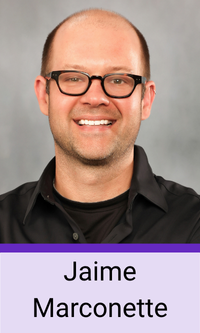
Data Storyteller: Jaime Marconette
I’ve always been passionate about music, writing and recording in my bedroom ever since high school. On spring break in 2003 during my senior year of college, some classmate friends and I took a road trip to Mardi Gras. As Carnival ended on Fat Tuesday, we had a few days to spare, so we looped on our way back to Virginia through Memphis and over to Nashville. Walking down Lower Broadway, I was blown away by all the great live music pouring out of every doorway. Amazing musicians in one club after another. I had never been in a place like that, and it was then that I knew I wanted to find my place in the unique lifeblood of the Nashville music industry someday, somehow.
Upon graduation, I got my first job at Stanford back home doing accounting and finance. However, I felt the only thing that would bring any sort of satisfaction would be something parallel to or directly engaged in music in some way. Stanford puts on over 300 events a year, and an opening came up in the Department of Music for a financial management analyst. It turned out to be a great way to align my interests to really work inside the business. I crunched ticketing, tracked budgets and learned from the inside how the money flows and many details involved in live music. Stanford books incredible, world-class artists from all over the world. It’s also associated with the non-profit Jazz Workshop (which presents the renowned Stanford Jazz Festival). It was a perfect fit, a fantastic job and I really loved the department.
Must Be Present to Win
A few years later, I was looking to get more involved on the marketing and fan engagement sides. It was 2008 and time to make a move. I really wanted to be in Nashville and also be closer to Susan, who is now my wife (we were long distance at the time). I sent off my resume to many labels, publishers and other Music Row businesses, but no one ever called back. I finally realized, “Why would anyone call me back when they have literally hundreds of people knocking on their door who can come in the next day?” I needed to be one of those people knocking on doors, ready to start work tomorrow.
So that May, I packed up and moved to Nashville. My parents might have thought I was a little crazy because I didn’t know anyone and had no job, but they were very supportive. There weren’t as many online recruiting tools back then as we have today, so I actually walked the streets of Music Row and around town, handing my resume personally to whomever would take it.
My timing couldn’t have been much worse, as within a couple of weeks of arriving the bottom suddenly fell out of the economy owing to the financial and foreclosure crises. I thought, “Oh, my god. What did I just do?” But I found a summer job which eventually led to a recommendation at AristoMedia.
I learned so much there with VP/Marketing & Publicity Craig Bann and his team in those five years. It was a great spot to be in, learning how the business worked and meeting artists, managers and so many others in the industry. Music videos were starting to gain more traction in the digital space. YouTube had only been around for three years, and Facebook only for four. I started looking at my job in music video marketing in terms of, “How can I use these new HTML widgets to get my clients videos in front of people?” I started using online tools from YouTube and CMT.com to build music video hubs, creating digital campaigns that got a lot of traction for multiple weeks in a row, even with unsigned artists.
Driving Success with Data
In 2014, when I applied up the street at Sony Music Entertainment to work on their digital marketing team, I organized a portfolio showing how at AristoMedia we had taken artists to no. 1 on CMT.com by engaging their fans to like their Facebook artist pages in order to watch the videos, then to post comments and buy the song. Showing the numbers really helped me get the job.
After a couple of years, I was promoted to Associate Director/Digital Strategy and then to Director after that. I added work on website infrastructure, CRM—data that was driving our projects to bring the artists’ vision to life and build their audiences, especially for our newer artists at the time such as Kane Brown, Cam, LANCO, Maren Morris and Old Dominion.
Over those eight-and-a-half years, I gradually found myself interested in being more involved in the digital business development in general. In mid-2021, Rob Jonas became the new CEO at MRC Data. By March 2022, the company was rebranded as Luminate, and soon after that I got a call. They explained they were looking to bring somebody in who understood marketing, how the pieces of the music business fit together on the client side, and how to use data in order to power their information.
“My job is to create stories about what’s happening today with fan consumption regarding artists and music around the world.”
With my accounting background and a master's in integrated marketing communications with a quantitative focus, they saw somebody who could help translate their data to a broad marketplace.
For my part, I saw Luminate as a company with a unique value proposition to labels and the music industry at large. It has arguably the most comprehensive data set for music consumption, as well as a lot of other data and partnerships continuously being added. I am such a music geek about the numbers anyway, so this was a compelling opportunity. I had to jump at it!
My job is to create stories about what’s happening today with fan consumption regarding artists and music around the world, such as how there are more independent and diverse artists moving up in the streaming pyramid and capitalizing on business opportunities.
Serving as a Trusted Source
Today, I’m involved in presenting our Tuesday Takeaway newsletter series, large-scale semi-annual reports, webinars, consumer consumption research, social media content, and other ways to communicate Luminate’s insights to labels, management, publishers, financial people and anybody connected to the industry.
We take very seriously our responsibility as a trusted source, so my role is to be tuned in and tapped in. We try to help solve the needs of our clients and the industry by providing data points that are impactful and matter the most to them. An artist can put out a track on day one and see a certain response, while a second track might only generate a third of the reaction as the first. There are definitely ways for artists to become more active in understanding how fans respond day-to-day in terms of streaming and social engagement, where being authentic is particularly important.
“Some of the most exciting stories we tell involve using data to shine a light on sociological and music trends. Being able to share those and what’s going on in the music industry is the best part of my job.”
For students, getting a well-rounded understanding of how the industry works is really critical. That’s why reading the trades such as Billboard and Music Business Worldwide is important. They do a fantastic job covering what’s happening on a daily basis. There are also very interesting thought leaders doing great work whom they can follow.
There are many sides of the industry that are getting much more data-savvy, so I would recommend paying attention to the numbers and understanding different data sources, what the metrics mean and how they can be utilized to give a marketing advantage or insight.
Finally, networking is truly so important. Even if it’s not about looking for the next gig, which might come from that, it’s vital to understand different people’s perspectives or at least understand that there are different perspectives because this industry is so diverse.
I'm so fortunate to have landed where I am and to be able to do this. There are so many great stories out there, but there are times when we’ve only got room for one to tell. Those decisions can be among the hardest.
Some of the most exciting stories we tell involve using data to shine a light on sociological and music trends. Being able to share those with others and what’s going on in the music industry is the best part of my job. It’s what I’m most passionate about.
Entertainment Business Navigator: Jonathan McHugh
Jonathan’s background includes radio syndication (Rock Over London, King Biscuit Flower Hour, American Top 40 with Rick Dees, The Howard Stern Show, Rolling Stone’s Guest DJ), labels (A&M, Elektra, Jive/BMG, Island Def Jam Music Group) and the motion picture industry (De Laurentiis Entertainment Group, New Line Cinema), as well as cofounding the Guild of Music Supervisors and serving as LA Chapter President and National Trustee of The Recording Academy. As owner of Song Stew Entertainment, he has music supervised and produced soundtracks for over 100 films and TV shows including The Wedding Singer, Austin Powers I & II, Mortal Combat, Spawn, Rush Hour, Blade, Set It Off, Love Jones and many more.
Jonathan has produced more than 30 films and TV shows with and about some of the biggest names in pop culture including Justin Bieber, Britney Spears, Muhammad Ali, Janis Joplin and Snoop Dogg. McHugh is currently directing his fourth documentary film.
The following entertaining and candid stories are from his forthcoming book. Whether you read one or all of them, you’ll benefit from Jonathan’s insights about the powers of persuasion and perseverance, regardless of whatever dimension of the music industry you choose.
Curious Explorer: Addison Nunes
In 2018, an opportunity to shift to a different entertainment industry came at Warner Music Nashville where, in taking on yet another new role, Addison has steadily advanced from Research Analyst to her current post as VP/Marketing. As you read her PROfile, you may well agree this is where Addison was destined to be all along.
After UCLA, there was a job opportunity to move to San Diego. It’s a beautiful city and gave me a chance to be near my sister, who was pursuing her undergrad at San Diego State. My first full-time job out of college was with Client Solutions Architects (CSA), which wasn’t a group of actual architects; rather, they were “architects of solutions,” managing and working within federal government contracts. Somedays I was onsite at a Navy research center which required a secret security clearance, even though I don’t think I was exposed to any large secrets.
Building Transferable Skills
The opening at CSA was intriguing as it was billed as a catch-all type role. As I wasn’t sure what career path I wanted to follow post college, it seemed perfect for me in that the responsibilities would expose me to a wide variety of tasks allowing me to continue to explore and try out new things. And it did: working hand-in-hand with my boss, Aaron Robbins, no two days were ever the same (cliché yes, but true).
I was the first person in this particular position and really thrived in that environment because without a playbook or clear path, there was a bit of freedom to continue to learn and help shape what the role’s full scope could potentially be. I was a bit of a catch-all in that I did everything from tackling open-ended issues like building out an internal SharePoint site or a dynamic PDF form (neither of which I had any formal training in or a clue how to start, but I was supported and allowed the time and resources to learn), to creating documentation around workflows, contract budget management, and more.
While I wasn’t really passionate about the industry I was working in and didn’t see it as a career in the long run, I realized how much I enjoyed exploring and understanding how people and systems operate and interact, in order to find ways to improve processes and make workflows more efficient. So I went back to school for my MBA at San Diego State, which ultimately led me to a job at the Atlanta Hawks.
During my time with the Atlanta Hawks I worked in two different departments. For my first five months I was with the Corporate Partnerships team, where my main responsibility was to arm those working to grow our sponsorship revenue with research on prospective and existing partners. I then transitioned over to Arena Operations, working directly with the EVP of the department. My start coincided perfectly with the kickoff of a $200 million renovation of Philips Arena (now State Farm Arena), which granted me experiences that I never would have gotten in an operations role anywhere else. The arena was an active construction zone, so when not at my desk I had to wear a hard hat and proper PPE (Personal Protective Equipment) around the building. I had a front seat to the renovation process and was involved in decisions such as mapping out concessions and testing out press box seating arrangements. It was an awesome experience. However, the scope of the role didn’t really offer me a chance to further expand my analytical skill set, and I began looking for new opportunities.
I was in a long-distance relationship at the time, and we settled on Nashville. (I wouldn’t necessarily recommend doing that as career advice, but we’re married now, so that’s worked out, too!) I was open to all industries and focused more on applying to roles centered in data and analytics regardless of the company. I had never thought about a career in the music business. Sure, I listened to and liked music (and took some failed piano lessons in second grade), but most of the ticketed events I had attended in my life to this point were around live sports instead of concerts. There are a lot of parallels between the music and sports industries—both fall under the business of entertainment, with extremely passionate fans—so I felt like my experience would be transferable.
“If we always just did exactly what the data said, there might not be as much variety in our music.”
One of the jobs I applied to was a new research analyst position at Warner Music, reporting to (now) SVP/Strategic Marketing + Analytics Torie Mason. When I drove up from Atlanta for my in-person interview, I brought along a printed booklet for her with examples of my past work—competitive analyses, sponsorship proposals, inventory reports, pricing models—organized in one of those folders with the clear plastic cover and blue slide to hold it all together, like you’d do for a grade school report. Torie found it the other day, and we still laugh about the way I chose to present the documents, but I would do it again in a heartbeat as providing those examples helped me land the job.
Torie and SVP/Radio & Commercial Partnerships Kristen Williams both have been extremely helpful to me in my Warner Music career not only in terms of support, but also by respecting me as an equal coworker regardless of the differences in the levels of our job titles. They take the time to talk through the “why” behind decisions, which in turn has allowed me to grow in my role as I have been able to better answer any questions thrown my way. They have also helped me understand the balance of music data and music as art. If we always just did exactly what the data said, there might not be as much variety in our music.
Learning to Interpret the Data
Even though you’re not the one making the music, you still feel very connected to it once it’s out in the world for everyone to hear. Part of my job in working with data is remaining unbiased, which can sometimes be difficult to deal with, especially for artists and songs that I am a true fan of, when we just cannot seem to get them to break through the noise. Whenever we do get a big win and get an artist to the next level or new milestone, it’s an amazing feeling—knowing how many people inside Warner (including yourself) and external partners have all touched the music in different ways that ultimately helped the artist achieve success.
There are now three of us on Warner Nashville’s analytics team working across an active roster of between 30-35 artists, plus keeping tabs on potential artists we may want to sign and even non-Warner artists for comps and benchmarking purposes. We interact with every department, acting as an information hub on one side and giving strategic guidance on the other. We’re analyzing large data sets and pride ourselves on not just providing insights, but also making them actionable and giving context so that our coworkers, artists and managers can easily understand the results. What might work for one artist doesn’t necessarily work for another, or even for the same artist depending on how much time has passed, as the landscape is constantly changing, even in terms of the tools we use.
“There’s never ‘one size fits all.’ The data is directional; it’s never, ‘If I only see this number, that’s always going to guarantee success.’”
A lot of what we do is being agile and building upon what we see. There’s never “one size fits all.” The data is directional; it’s never, “If I only see this number, that’s always going to guarantee success.” There’s so much we can’t predict in terms of human nature or what the artists are doing. They might pivot completely on their sound or what they want to release and when. We are constantly learning and refining strategic best practices.
Distilling the Numbers
Much of what my team and I do daily is to provide context. It is one thing to report a number such as the total weekly streams for a song, but how do you know if that number is high or low? Sure, five million might seem big at first and can cause excitement, but we show numbers in terms of how they compare to an artist’s other recent releases or where the streams sourced from on a DSP—playlist, algorithmic radio station, library/collection or search.
For example, let’s use the artist with five million streams on the first week of a new song. If you also know that their past three songs only did two million first-week streams, then you now know that this new one is outperforming what we normally see for the artist, so you are excited. However, when you dig in even further and find that 70% of these first-week streams came from an inclusion on one major playlist, when on the past releases only 25% of activity sourced from playlist support, you now may be less excited, as the song might have been “propped up” more from editorial support than by seeing fans gravitate towards it. You also pull in other metrics such as social UGC, social engagement, saves, Shazams, building-week trends, etc.—all with historical comps to really find out what this five-million number indicates and what we should do as a label. You might decide that we can use this playlist awareness to bring more potential fans into the fold. Then you work with other departments to figure out several things: Are we targeting the right audiences through digital campaigns? Who is the artist opening for on tour? Can we use this “headline” story to get further editorial support across other DSPs?
Sometimes we need to adjust, adapt and re-strategize what we've been doing for an artist or project. There’s a challenge every day in this constantly changing business, and we are using data to see if the marketing levers we are pulling translate into action as we compete to get consumer attention. I’ve always felt listened to and valued at Warner, and over time have gained more trust as I have realized how to distill information depending on both the request and the requester.
Appreciating Mentors
One of my big mentors goes back to my first boss, Aaron Robbins. He took a chance on hiring me, a fresh college graduate, who at the time had no idea what the government contract industry was and all that it entailed. Aaron was a big advocate of workplace culture—not in the sense of having a pool table in the middle of the office, but more about treating employees as humans and empowering them to do their jobs so that everyone felt pride in their work. In working for him, I always felt more as if I was working with him. Aaron always took the time to answer any questions I had and provided constant opportunities that were far beyond those typically offered to someone in an entry-level position. He invested in me as a person, and I never felt I was just a box on an organizational chart.
Torie Mason has also been an important mentor in a similar way, as she has always supported my growth and development both professionally and personally. I have learned a great deal from working on her team and being able to observe her demeanor and how she navigates everyday micro-business decisions while keeping attention at the macro level. Torie is also very skilled at taking a step back and viewing situations from different perspectives—those of fellow coworkers, Warner corporately, artists, managers, etc. She is one of the most respected and trusted music executives in Nashville.
Everyone I’ve worked for or with has taught me something, as I believe you can learn from every situation, good or bad. If you find yourself in a situation where you don’t feel like your boss respects or listens to you, then of course you aren’t enjoying yourself or your role currently. But I see that as an opportunity to know what is important to you in looking for your next role or how you’d like to treat your future employees or teams whenever you become a team leader yourself. For example, in a past internship I had a boss who told me she would never ask me to do something she wouldn’t do herself (and she practiced what she preached). I’ve taken that lesson with me throughout my career and now with my own team. I don’t ever want to just pass along busy work, but instead to make sure what they are doing is allowing them to develop in some way even if it’s not the most exciting task.
“When one of our artists is performing, instead of watching the stage, I sometimes turn around and look at the crowd.”
If you can figure out early what you want to do in music, that can be beneficial, as you are then able to narrow your focus and start to take steps to accomplish your goal. However, if you are more like me and aren’t completely sure what career path you’d like to explore, that is 100% okay. Take the time to be curious, ask questions and challenge yourself to develop new skills. Hopefully through the process you’ll find something you are passionate about. Besides required classes/coursework, I would suggest exploring careers, talking to as many professionals as you can both inside and outside of the music industry, and following all sorts of artists across different social media platforms. You never know what you might learn from a digital marketing rollout or who might serve as an important part of your career arc.
No matter what your job is, there are good days and bad days. We are all searching for something where the good days heavily outnumber the bad. Even on bad days, I can easily be reminded of my impact through my personal life, like when my sister-in-law sends me a TikTok on her “new” favorite artist whom we happened to have just signed. I love those pinch-me moments when you realize the impact music can have on other people’s lives. When one of our artists is performing, instead of watching the stage, I sometimes turn around and look at the crowd: people who probably don’t know each other, but they’re all there together, sharing some form of experience because this song or artist means something to them.
Early Adopter: Christine Osazuwa
In 2020, during Covid, amid mass layoffs across the music business, Christine wanted to do something to provide education on how to use technology tools and insights to help artists and advance the industry. So she created Measure of Music: a free virtual weekend of keynotes, presentations, panels, speed-dating and a popular hackathon competition that ran for six years. The idea was to foster collaboration and networking opportunities in a safe, transparent space. Attendees didn’t need to be highly educated, in the right city or connected to the right people to participate. Anyone could show up, learn, build and be seen, and they did: 800 people tuned in live in 2026.
I have loved music for as long as I can remember. My earliest memories are listening to the Temptations and Diana Ross with my parents at home on a Saturday morning, dancing around living room with my daddy to “Papa Was A Rolling Stone.” Ironically, my other first love is computers. I don't remember a time when I didn't have one in my life, so working in music data was kind of an inevitability, I suppose!
But I don't think I fully knew that music was a career you could have until I was 11 or 12. I remember watching the MTV Music Awards, and how artists would go onstage to get their award. They’d thank God, their parents and then start thanking a bunch of other people. Even as a kid, I wondered, “Who were these people and how can I be one of those who get thanked on the stage after the artist wins an award?" That was when I realized that the music industry was a job in which people got thanked for helping artists. And that’s how I knew I wanted to work in music.
On Being Young and Serious
It's always a bit scary when a parent hears that their child wants to work in the creative arts in any way, even if they're not wanting to work as a creative. I started booking artists and running street teams when I was 15, and my parents would drive me to the shows. Because smoking was allowed in buildings back then, I’d come out smelling like cigarettes. Their feeling was, “All right, this is what she wants to do … That's where she wants to be.” When I was 19 and was performing, I called my mother and said, “Mom, I'm going on tour. I promise to call every day. I’ll be gone for 10 days.” They said OK. I don’t know if they always fully understood what I was doing or why I wanted to do it, but they never stopped me from pursuing my dreams.
“You're constantly making mistakes, like everyone else, but as a woman and a person of color, you don't get as many opportunities to make them.”
Being so young and a black woman, it was a weird and interesting time, but it was also tough, especially working in rock and roll, for many reasons. First, there were a lot of guys thriving in the music industry then and now, but so many fewer women got the same opportunity. It was much more common for bands to take their male friends on tour to sell merch or be a guitar tech than their female friends. As a journalist backstage, even with all the credentials, I’d get a look of surprise or assumption that I was the girlfriend of someone in the band.
When I was young, I was never looked at as the music executive that I wanted to be because I did not look like everyone else. I’m still trying to navigate that world. On top of that, I lived in Baltimore, four hours from New York City by train and close to where the music was happening, but just a little bit out of reach.
My parents were teachers, so I didn’t know anything about working in a corporate job, especially at knowing how the music business worked and how to navigate it. You're constantly making mistakes, like everyone else, but as a woman and a person of color, you don't get as many opportunities to make them. These are all the reasons why I struggled to be taken seriously.
I applied to go to college and was accepted at some really great schools such as John Hopkins. But the University of Maryland, Baltimore County offered me a full scholarship. And I’m thankful that my father was able to negotiate even more money than what they initially offered me. Even though UMBC didn't have a music business program, which is what I wanted, I thought, “Well, I have to make this work because I can graduate from school pretty much debt-free.”
What UMBC did have was a program called interdisciplinary studies, where you could create your own major. I ran a magazine from age 16 to 21, so mine was journalism and entrepreneurship. My adviser, Stephen McAlpine, had a drum kit that took up almost all the space in his office; there was just enough room for his desk and one chair for me. I thought, “I’ve found the right person!” He was instrumental in helping me get through the system in order to finish my documentary film as my senior thesis.
I knew that I wanted to get my MBA, so before going to Loyola Maryland, I took courses in accounting, statistics and others. Someone showed me a regression model, and I thought, “That’s magic.” And that was when my love of data really started.
While in grad school, I worked for a ticketing company and then for UMBC (the only non-music job I’ve ever had), starting as social media and web coordinator, updating and building out their sites and handling social media marketing. I had learned web development when I was 14 or 15, helping artists design their Myspace pages, making my own and working with companies on the side.
But while running the marketing campaigns, I realized there were metrics we needed to understand, and there were analytics—a word I heard for the first time. I needed to understand how this all worked and how to assess the ROI of the marketing we were doing. That's how I got into data and insights. As an employee of the University of Maryland system, you’re offered free tuition at any of their schools. So I got my master's in data science, as well.
The Measure of Music Story
In the beginning, even though my husband and I are developers, I had no idea that Measure of Music would even work. The first year, I put it together with $200 on Zoom. A lot of conferences are for senior executives and are expensive. For me, accessibility for all was really important, so it had to be free. And I wanted to have as much diversity as possible. Since there was Covid, there was no choice but to make it virtual, and I just kept it that way.
“Don’t just look at data for the sake of data. Instead, take the problem you’re trying to solve and work backwards to figure out what data you need to solve it.”
People had their own products they needed to show, so I came up with the idea of a hackathon as a solution. Measure of Music was really just constantly coming up against a problem and finding a solution, such as accessibility, diversity or being able to present a product. It's very similar to how I do data work. When I’m talking with artists or executives, I always say, “Don’t just look at data for the sake of data. Instead, take the problem you’re trying to solve and work backwards to figure out what data you need to solve it.”
Guiding Lights
To be honest, the most powerful mentors in my life have usually been white men, especially senior white men, because they have the ability to be in the rooms that I'm not in and they’ve usually taken me a lot more seriously than women, and people of color are in different organizational structures. Various white men in my life have been great champions and supporters of me in various organizations where I’ve worked, especially at major labels, where I was able to get a lot of work done and get the visibility I needed to progress my career and progress the career of the artists I was working on. That wouldn’t have been possible otherwise.
“For me, the most rewarding experience, in and of itself, is feeling validated that I'm doing the right thing.”
I don’t have what you would call career highlights, but I did get to go to the Grammys for the first time last year. Since part of the reason I got into music was seeing artists thank people on an award show, being there in person was pretty amazing. There have been plenty of great experiences, such as going to the Brits, the biggest awards show for the UK music industry, three times. I work with Abbey Road Studios in various ways on various projects, and it feels incredible every time I’m there. I don't really care how big or small the artist is; it’s about helping someone achieve their dreams and accomplish their goals, including giving an artist a gold record for the first time. For me, the most rewarding experience, in and of itself, is feeling validated that I'm doing the right thing.
At the end of the day, what I always wanted to do, even as a kid, was to just to help artists, and it’s been an amazing 20 years doing that in many different roles at a major label, ticketing company in the live music space, or now, co-managing artists and telling people about incredible talent. That’s what keeps me motivated.
If I'm ever feeling even the slightest bit jaded, I’ll go to a live show. I love live music more than anything in the entire world besides my husband. Live shows make all the stress, fatigue, chaos and silliness of the music industry worth it—to be in a room surrounded by people who are as just excited as you are to be there.
I never planned to move abroad, but the political climate in the States made that a more attractive thing to do. I thought I’d live in New York, maybe Nashville? Everything is a little bit different than what I thought it was going to be, but it's beautiful and even better in some ways. I've had a wonderful time with the work I've done, and wouldn't change a thing.
“Don’t wait until after you graduate to get internships and take on projects. I started booking shows at 15 and signing contracts that probably weren't even legal.”
The best and worst thing about the music industry is that anyone can be in it. One big issue that graduates looking for work in the music industry run into is that quite often they are competing for jobs with people who didn’t go to college. By the time they finish school at 21 or almost 22, they’re up against those who have up to four years of full-time experience.
Don’t wait until after you graduate to get internships and take on projects. If you want to be an artist manager or be in A&R, for example, start doing the work now. I started booking shows at 15 and signing contracts that probably weren't even legal.
While you're in school, make sure you focus your projects on music or entertainment. My MBA had nothing to do with music, but when we were studying SEC filings, I picked a music company. I always found a way to incorporate what I studied into what I loved. Be very passionate and driven to do the work. Try to get as much experience as possible by the time you graduate.
Analyst: Rutger Rosenborg
I grew up with a single dad, and didn’t know my mom. I’ve been a musician and artist since I was eight. My first public performance was a talent show with a little band I had through middle school and high school in Southern California. My dad was very working-class, and he had no idea about college or anything that goes into it. It was almost on a whim that I applied to college, and he was very excited for me when I was accepted to Stanford. But I don’t think he had any expectations that his son was going to be a rocket scientist or something like that. He was simply proud and supportive, no matter what, which was nice. It’s not always like that.
When I went to college, I took a break from music. I was creative with poetry, but was also in research labs all the time, doing studies on sleep, memory—whatever the labs were doing that I was in. I learned some data skills, but never thought I would apply them. I was accepted into Stanford’s master’s program for neuroscience after my undergraduate studies there, but I was drawn back to music … it had just been with me for so long. Maybe it wasn’t the wisest decision to spend seven years on the road touring, as you have to work odd jobs living that lifestyle. I did everything from freelance journalism to giving music lessons on all the basic rock band instruments, but primarily guitar.
We were in the studio and on the road all the time, with a lot of highs and lows. Sometimes we played in front of a thousand people, sometimes just for the sound guy. It was definitely a tough life, and obviously doesn’t compensate as much as other things do. But there’s something about it that doesn’t let you go, and it hasn’t ever since. From all these jobs, I started making connections and wanted to have more stability. I figured I should be a little smarter about this and professionalize my experience effectively. I had a lot of knowledge from being in bands, effectively running our own business, which is what you have to do. And I knew the tech side of things was the future. So that’s when I went to NYU’s Steinhardt School for my master’s degree and made the leap to music business and music technology.
I was initially very interested in music information retrieval, as there are a lot of different technical subjects you can explore. Through that, I learned about analytics, which I’d been using intuitively beforehand because as an artist I’d already been using Spotify for Artists, Instagram Insights—all these back-end platforms. But until studying it at school, I never made the connection that, “This can be applicable in a broader sense, and it’s much more powerful than I ever thought possible.” That really opened my eyes; I had just been scratching the surface as an artist.
A subject like this is simultaneously the arts and business. And some of it is very technical, as well. To some extent, it’s sort of like “choose your own adventure.” My professors and advisers were very helpful because they knew what I wanted to get out of it. After graduate school, I wasn’t too interested in working at a traditional music company like a label or publisher. I wanted to be somewhere a little more disruptive and at a place looking toward the future more. My adviser connected me with Chartmetric, a company with just a few employees that had a part-time internship opening working with Jason Joven, who’s no longer at the company but has been my most important mentor. He was so encouraging, allowing freedom to learn new things and grow different skills. Definitely the best boss I’ve ever had.
“I wanted to be somewhere a little more disruptive and at a place looking toward the future more.”
At a smaller technology company like ours (about 35 people), you sometimes experiment and make improvements as you go along. Surrounded by really smart people, I was able to learn new skills such as SQL and Python that you probably wouldn’t in a larger, more structured corporate environment. We were largely our own bosses, so there was a lot of freedom and leeway in terms of the projects we could take on.
At Chartmetric, I managed the content and marketing team. They’re all women, and I find that super-inspiring given how male-dominated this industry is. Most of my mornings were spent coordinating with them all the projects we’re working on with them. From there it was anything from developing marketing campaigns and making strategic decisions based on what key performance indicators (KPIs) we were looking at.
In addition to managing and marketing/advertising another department, I interfaced cross-functionally for our analytics work. Some clients want more customization than one sees in Chartmetric’s data. A client may have a catalog of 50,000 tracks that they want to see all in one place at a glance, so I was in charge of building them custom dashboards. That involves everything from writing the queries to visualizing the dashboard to making the connections happen. Another client wanted to know what’s happening with a particular Rihanna track after her halftime show during Super Bowl LVII. I’d figure that out and send them a report. We also published three data-driven stories a week now, which is a lot.
Benchmark Yourself
As a music artist, a critical skill is being able to benchmark yourself. It’s really important to set goals and to use data to measure your progress. If you want to get, say, 100 monthly listeners this month, are you hitting that mark or not? If not, how can you tailor your strategy to help you hit it next month? It’s about being organized and methodical about your music.
Related to that is the ability to not focus on a single metric, but instead on the relationship between various metrics. It’s not so much about, “How high are my monthly listeners?,” because if you get on an editorial playlist, your monthly listeners shoot up. But once you’re taken away from that playlist, they’re going back down. It’s very volatile. So you need to look for relationships in the data.
For example, are your Spotify followers growing in conjunction with your monthly listeners, with the goal of achieving a 1:1 ratio? If not, you’re not converting your audience into fans (your conversion ratio). For new artists, it’s about how you branch out from friends and family to make your fans your biggest advocates to other people. So you have to think holistically and learn to identify the signals that say, “This is having X effect on this platform,” or “This metric indicates that this isn’t just momentary growth; it’s more long-term growth that can ultimately give me a more sustainable career.”
It’s definitely not easy for artists to know this on their own, so I’m happy to recommend companies, managers and label services. Ultimately, it’s going to be up to those people who like the artist’s music or see something in their stats that would justify working with them. That’s why, in large part, you have to have a solid foundation on your own, especially today, to be able to justify yourself to traditional labels, label services companies and management companies. Sadly, they’re just not going to care unless you have that foundation under you.
Despite what a lot of people suggest, I don’t think it’s necessary for an independent artist to be on every platform that you can. Not only is it exhausting and overwhelming, it’s also detracting from actually making music and not an efficient allocation of what probably are limited resources. Be aware that platforms have their own demographic bias. While it seems everyone is making tracks blow up on TikTok, if your audience base isn’t part of that demographic, you should focus on building your appropriate audience base on the platform where they really are or where you feel you can cultivate them. Once you build up enough of your audience base, then you can think about expanding. Maybe by that point you have enough momentum to be able to get a team to help you scale a different platform.
“Be very discerning about the data you’re looking at.”
Working in data, you start to realize how people tailor it to their own needs and viewpoint. But it’s important to not come into it with preconceptions by saying, “I’m going to try to prove this.” Instead, see what’s there and then form your analysis, especially when you have lots of music data points. First, there’s a question of how accurate any of the data is that you’re getting from many platforms. For instance, Spotify uses IP addresses to geolocate listeners and streams. In itself, that’s a little dubious because, for example, when I’m in an office in the financial district in Manhattan, my IP address says I’m in Hoboken, New Jersey. Data can be informative, but it’s possibly not going to be 100% true or accurate. Mostly, it’s better than not having the data, but there are definitely some issues that come from the difficulty of collecting so much data from all these disparate platforms and data sources. Be very discerning about the data you’re looking at. Make sure it’s as clean as possible so you can be as confident as you can of the conclusions you’re drawing from it.
If you’re interested in a career in music research analytics, languages like SQL and Python are super-important, or at least can be for higher-order analyses. R can be useful but is not necessary (for data manipulation, calculation and graphical display). In terms of platforms, I find Looker Studio usually does the job, but if you have more complex tasks to perform, then Tableau is pretty good. There are more UI-friendly platforms like Domo. Another is Bubble, where you can create your own visualization app with a nice user interface. And of course, Excel and Google Sheets, which you’ll use way more than you think you will.
But my primary advice is to know the music, and never forget about the music. It’s a lot easier to teach technical skills, research and “best practices” than to teach music appreciation, cultural appreciation and music history. That often gets lost, but I think it’s the most important dataset to music research because without it you just don’t have the cultural, historical or, frankly, sonic contexts to be able to interpret data as best as you can.
Relationship Builder: Chad Schultz
Most recently Sr. VP/Marketing & Industry Relations at the former live music services startup/promoter ShowOps in Nashville (primarily focused in Christian music), Chad is deeply involved in community service, currently with Musically Fed, which has provided nearly 750,000 surplus meals to sheltered veterans and musicians in need by routing leftover catering from touring artists such as Dierks Bentley, Zac Brown Band, Kenny Chesney, Shawn Mendes, P!nk and Blake Shelton. Chad also has chaired the Radio Advisory Board at St. Jude Children’s Research Hospital. And having battled cancer issues himself, Chad served nine years with his cancer-surviving twin sister, Heidi, on the board of her Planet Cancer charity for younger adults that was acquired later by the Lance Armstrong Foundation.
I've always been fascinated with music, and great music does one of three things: it makes your heart pound, your feet tap or evokes an emotion. I was studying at Oxford in England in the summer of 1987, the year U2’s The Joshua Tree album came out, and their concert at the Cardiff Arms Park rugby stadium in Wales that July was one of the most incredible shows I’ve ever seen. To this day, whenever I hear “With or Without You,” my mind is transported back to that night, the beach along the Gulf Coast where I grew up and first heard it and the girl I was dating at the time. Clint Black’s “State of Mind” and Trisha Yearwood’s “The Song Remembers When” both message this recall phenomenon.
After college, I took a trip to the Grand Canyon and ended up staying near the South Rim, waiting tables, trying to figure out if I wanted to go to law school, which some of my friends were doing. A friend said, “Don’t, unless you’re sure it’s what you really want.” My parents always told me to do whatever interested me, so I decided against it. I give them a lot of credit for encouraging me to pursue something I loved. My mom passed away in 2024, but my dad is still incredibly supportive.
I took a few jobs before finding an ad at Arizona State University in 1993 for Insight Management, an entertainment marketing company in Scottsdale, which was looking for interns. I’d already graduated and didn’t necessarily need an internship, but thought, “Wait ... I could actually have a job in the music industry?” So I called founder/owner Maria Brunner, and we hit it off. I said, “Let me prove to you what I can do.”
Taking the Plunge
I really wanted to learn the business, and though there’d be no pay at first, I figured I could earn enough at night waiting tables and bartending to support myself. I dived headfirst into live event marketing, tours, record releases, festivals and other promotional activity, eventually joining the company fulltime. We consulted on advertising buys for several regional and state fairs, and worked with a lot of top artists such as Lorrie Morgan and Clint Black. During those three years, Maria was my first true mentor. Honoring her late veteran husband, Mel, Maria also started the Musically Fed charity on whose board I’ve been a founding member since 2019.
In early 1996, I was hired by Mercury Nashville VP Larry Hughes to do Gavin promotion (secondary and tertiary markets). I’d worked with Larry on tour promotion for David Lee Murphy when I was at Insight while Larry was at MCA, so that was the connection. After nine months, Mercury moved Chris Stacey to Nashville from Southwest Regional Promotion to help Shania Twain cross over to pop, opening up Chris’s post in Dallas for me, reporting to Larry and VP Norbert Nix. My first day on the job was actually in Nashville, where it was 21 degrees and snowing that January. I had just come in from beautiful Scottsdale, where it had been sunny and 74. I’d been told in advance, “See you there Monday,” so I arrived at 8am and waited … and waited. I nearly froze sitting in the parking lot for almost an hour before someone else arrived to let me in. I thought I was being pranked because no one had told me about the non-conventional hours that many Nashville music businesses keep!
I quickly found out I didn’t know what I was doing. I didn’t even know what “adds” were. While I liked the idea of calling radio programmers and developing relationships, I found out I was supposed to ask them to actually add our records to their playlists!
Larry taught me, “I pay you to do a job, not to put in a certain number of hours. If it takes only 20 hours in a particular week and you then want to go play golf, fine. But if it takes 60 hours, I expect you to do that, too.” (With travel and weekend shows, it’s often that and more.) I sometimes thought to myself, “I might not be the best promotion person, but nobody’s going to outwork me.” And in my first year, I was nominated as the Gavin Regional Promotion Person of the Year. (Editor’s note: Learn about trade publication Gavin in the Audio and Radio section.)
Getting Paid to Play
I always used to be paranoid about job security. Which, of course, is ironic, because in this business there really isn’t any. But my mom always said, “If you worry about that for the rest of your life, you’re going to be miserable.” So I’ve learned to measure success differently. I remember reading Robert Redford’s definition of success as “when you don’t know whether you’re working or playing.”
“I always try to remind myself how fortunate I am to work in a business that most people consider a hobby.”
For example, if I had an extra pair of seats while working a Shania Twain concert. I’d go to the very back of the arena and find some mom with her daughter. I’d say, “I’ve got some signed tickets from Shania for you to sit a little closer.” They’d be so excited. We’d keep walking and walking, their eyes getting wider and wider. Needless to say, they would completely flip when I’d seat them in the front row. I’d say to myself, “I get paid for this!” … and I did for eight years. I always try to remind myself how fortunate I am to work in a business that most people consider a hobby.
In 2001, Sony Music Nashville President John Grady and VP/Promotion Larry Pareigis approached me about joining the company for Southwest Regional, which I didn’t initially accept because I was still under contract at Mercury, though there’d been rumors of upcoming cutbacks there. I’d been told my position was safe, but two hours before boarding a plane for Mercury’s Christmas party in Nashville, I was laid off. Fortunately, the Sony job was still open, and I took it.
To give you an idea of what kind of man John Grady is, when I was diagnosed in 2004 with a cancerous tumor that resulted in losing two-thirds of my right lung, John immediately flew down from budget meetings he was attending in New York to see me. I asked him, “Are you firing me?” He said, “No! I'm here to tell you that your job is going to be here. If you need to fly to MD Anderson in Houston for treatment or whatever else, go ahead. We’ll cover it. Don’t worry, and we’ll see you when you get back.” That was above and beyond for a label head to offer that to an employee, let alone travel all the way from New York to San Antonio to do it.
In 2005, Chris Stacey, who by then had become a good friend, was at Vector Management, working with Sister Hazel, the Drive-By Truckers and others. We both took pay cuts (and a big risk) to cofound Hurricane Interactive Promotions & Management, with Chris in Nashville and me in Austin. Among the technology-related work we did, our company projected text messages from concert fans onto a stage screen during shows, hopefully supported by advertising while also building databases of mobile numbers. Our clients included Brooks & Dunn, Rascal Flatts and artists from the majority of Nashville labels. The company was acquired by Mozes in 2007, and we added Taylor Swift, the Nashville Predators NHL team and many others. Over time, my role shifted to business development, client services and eventually major account management, though the latter didn’t interest me as much as the bigger-picture work.
Hit Records and Guinness Records
So in 2010, when Chris Stacey joined Warner Music Nashville as Sr. VP/Promotion, he invited me to come aboard as National Director of Promotion. It was a busy and successful time, as during my 12 years there, the roster more than tripled from 12 to 40. Working with Chris, then SVP Kevin Herring and Radio Division head (now Sr. VP/Radio & Commercial Partnerships) Kristen Williams, we had dozens of no. 1 records, including 30 by Blake Shelton alone, plus Kenny Chesney, Zac Brown Band and a lot on newer artists such as Dan & Shay, Brett Eldredge, Cole Swindell, Frankie Ballard and Hunter Hayes, whose Road Race set a Guinness Record for the most shows in different cities in one day, throughout the Northeast.
With Cole Swindell in 2016, our boss, then-Warner Music Nashville Chairman John Esposito, challenged us to think big with Cole’s next album release in 2016. I thought, “What could be bigger than doing a concert at the World Trade Center?” Espo loved it, so ended up being the first-ever live TV broadcast and syndicated radio show from World Trade Center 4, with the audience made up of families of 9/11 victims.
“The quickest way to success is to help others succeed.”
While attending Rhodes, my college fraternity fundraiser every year was for St. Jude. Later, whenever with artists in my region when a station was having a St. Jude radiothon, I would take them by to do an interview, play a few songs and meet some donors. The hospital encouraged me to get involved to help with fundraising and board recruitment. St. Jude is an amazing organization, and I was privileged to serve on their radio advisory board for several years, including as board chair my final year. I strongly recommend that students get involved in a charity. The quickest way to success is to help others succeed. It’s not only a great thing to do, it's also one of our responsibilities.
When you’re first starting out in the business, you need to show your work ethic, which I learned from my parents. As Henry Ford once said, “You can’t build a reputation on what you’re going to do.” That also means working at communicating—making people feel comfortable and learning what the client wants. That’s a gift not everybody has. I’d been told by teachers that I talked too much, but I was able to turn that into a positive.
“You cannot underestimate the importance of relationships in all aspects of the business, that’s for sure. AI can’t take over that.”
I’m definitely on the relationship side of the business much more than the data side. Of course, we have to be able to learn to use data, whether it’s research from radio or anything else, and be able to communicate that to our constituents, whether that be radio stations, streaming services, labels, managers or whomever you’re dealing with.
Coming from a small town, I never dreamed the places I’ve been able to go and the people I’ve had the opportunity to work with would be possible. I’ve been very fortunate to work with a lot of great mentors and leaders such as Maria Brunner, John Esposito, John Grady, Kevin Herring, Luke Lewis, Chris Stacey and Kristen Williams, among others. So my advice to students would be this: Be hungry. Become an intern. Volunteer. Show what benefit you can bring to the job. Try to meet as many people as you can. You cannot underestimate the importance of relationships in all aspects of the business, that’s for sure. AI can’t take over that.
Streaming Promoter: Kyle Shaffer
I’ve always been someone who is very technology- and entertainment-driven. Even when I was 10 or 11, I was, somewhat shamefully, the one downloading music from LimeWire, but wanting to create my own collections. When I go back to the house I grew up in, I find stacks of CDs of various mixes I’ve made. That has led to my passion about playlists, and Spotify in particular. Whenever you hear a list of songs in a certain order, I can almost think of what will come next because of how I listened to it back in the day when I was curating my own music. Music always brings back a story. There are times when I can remember certain smells and where I was when I was first listening to a song. It can be very nostalgic. I always imagined myself in the entertainment world and working with music. I edited videos with Adobe Premiere in high school, and Ohio University had full production and recording studios, and I fell in love with it.
A typical day for me starts with reviewing the activity level of curators we work with and checking on all our active artist clients, as well as onboarding incoming business. We use the HubSpot software platform for our customer relationship management (CRM). There are a lot of strategic conversations about how to improve our portfolio of services, such as working with an AI company to tag certain songs based on their audio characteristics that may provide a good match for what individual curators want.
We also discuss ways to better support curators, such as by staging networking events and other initiatives that develop real relationships, rather than transactional ones. Our non-payment approach takes more time and effort, as we seek those who really love music, will be sticking at this for the long haul and aren’t trying to build a career out of creating playlists. We have 4,000 playlists from 1,500 curators who come from a variety of backgrounds: high school kids, college students, interns at music publications, parents and everyday people in all kinds of everyday jobs. Unless you’re a top curator, there’s no salary to be gained from it, so we offer tickets, backstage access, CDs, vinyl and merchandise. Many still want money, but once you start paying curators they’re just going to pull your music off when you stop.
“Be willing to network and volunteer without expectation of something in return.”
If I were in front of a class of college students interested in working in the music industry, I’d say to have an open mind. Learn all the different facets—both the creative and the business sides—because there are many different departments that are really interesting. It's important to know how they all function at a professional level. That way, you’ll understand if a particular opportunity is right for you or not. Most important, be hungry. Music is one of the most desirable industries to get into and it’s competitive simply because there are so many people willing to take a lower salary or sacrifice other things to do it, especially in a town like Nashville. Reach out to people, and keep trying even if they don't respond the first time or the second time or even the third time. Be willing to network and volunteer without expectation of something in return. That might mean offering to do some awesome free work as an intern, where you grind it out to prove you are the person for the job. Business relationships in the music industry are like having a bank account. You can't make a withdrawal until you make a deposit.
As a job candidate, don't be afraid to take a leap to a place that you're uncomfortable in because once you become comfortable in that situation, it's the most rewarding feeling you'll ever have.
Duke of the Discs: Dave Sholin
Enjoy these short stories and industry insights from Dave’s forthcoming autobiography.
Music Tech Pioneer: Howie Singer
When I was in elementary school, I had a decent singing voice (appropriate for someone named Singer) and even had solos in chorus performances. But that skill went by the wayside when my voice changed. I found my niche in music when I learned to play the saxophone in junior high school and continued into high school including playing in the bands for various school and summer show productions. Like any child of the ‘60s, I not only enjoyed listening to the Beatles and their TV counterparts—the Monkees—I also listened a lot to the instrumental group with the most hits at the time—Herb Alpert & The Tijuana Brass. But I was far better at math than I ever was at music and never considered a career in the music industry until much later in life.
The Onset of Online Music Delivery
In the mid-‘90s, my responsibilities at AT&T were focused on figuring out how to build successful business based on technologies developed in the research labs. Not surprisingly, AT&T was interested in the possibility of sending different kinds of entertainment over their communications network. Even with highly compressed music (using AT&T audio technology), the capabilities of modems meant that it would take 10-15 minutes to download a single song. That was certainly faster than driving to the record store, but not fast enough to drive mass market adoption. We would need broadband to the home—and later to mobile phones—to make networks the distribution channel for music and movies.
But the bigger challenge at the time was to persuade the record labels that digital music was not only possible, but also would be in their best interests. When we played compressed files for industry executives, the reactions were not positive (“No one is going to listen to that shit” was the exact quote). They were willing to dip a “toe in the water” to try some things as experiments, but there was little motivation to go “all-in” when they were making money hand-over-fist with the most profitable format in music history, the CD.
It was only after Napster spread like wildfire, starting at universities with high-speed connections, that the major labels were willing to take meaningful steps. Though even when they tried to offer their own services, such as MusicNet and Pressplay in the early 2000s, they encumbered those services with user-unfriendly rules enforced by cumbersome technology in an effort to maintain control and to minimize the ongoing declines in the CD business. The choices they made led to the failure of these services and provided an even longer window for declining revenues. It took Apple’s introduction of the iPod and the iTunes store as the first meaningful step to offset those declines, at least partially.
The First Streaming Jukebox and YouTube Music ID
In 1998, AT&T was a corporate sponsor of the Rock & Roll Hall of Fame and Museum and asked us to come up with a way to show off the company’s technology. So I led an effort to develop a streaming jukebox for the museum. It had every song of every inductee to the museum stored in compressed format on a server in the basement. At the time, it was the largest jukebox in the world with 30,000 songs. (Of course, that represents a tiny fraction of the catalog at any of today’s streaming services). Visitors to the museum could use a touchscreen kiosk to select any album or song, and it would stream on the high-speed Local Area Network in the museum. It proved so popular, they had to add more touchscreens to satisfy the demand. And it was a proof of concept for the future world of streaming—that the technology in homes and portable devices could make it a reality.
“I led an effort to develop a streaming jukebox for the Rock & Roll Hall of Fame and Museum. it was a proof of concept for the future world of streaming—that the technology in homes and portable devices could make it a reality.”
Warner Music was the first company to license its music videos to YouTube. As the technology member of our team, I was responsible for working out the details in the agreement with YouTube’s engineers, allowing them to identify our music when it was uploaded by users. At first, YouTube used third-party software to accomplish this, but eventually they developed their own technology, now known as Content ID. These efforts played a critical role the ability to monetize User-Generated Content, amounting to billions of dollars for labels and artists.
“If you had told me when I started as a member of the Technical Staff at Bell Laboratories that someday I would discuss technology disruption in the music industry with Neil Young, George Michael, Robert Plant of Led Zeppelin or Nick Rhodes of Duran Duran, I would have thought you were imagining things.”
After living through these transitions from physical goods to downloads to streaming, I felt that those experiences provided me the perspective to tell the story of tech disruption in the music industry. People tend to focus on Napster as the epitome of disruptive moments, but I knew that this was something that had happened numerous times before. Teaming up with Bill Rosenblatt to research and to write that story kept me sane during Covid. And seeing it become a reality when Oxford University Press published Key Changes: The Ten Times Technology Transformed the Music Industry has been a really rewarding experience.
Given the various phases of my career, it’s really hard for me to pick out a single mentor who was more important than others. I’ve been very lucky during my career to have a long list of people who guided me directly or gave me a nudge in the right direction. One of the best things about co-writing Key Changes was having the chance to acknowledge so many of those people by name and to express my gratitude.
“My intention was to play a meaningful role in the transition from physical goods to digital music. And I believe I achieved that goal.”
If you had told me when I started as a member of the Technical Staff at Bell Laboratories that someday I would discuss technology disruption in the music industry with Neil Young, George Michael, Robert Plant of Led Zeppelin or Nick Rhodes of Duran Duran, I would have thought you were imagining things. However, when I made my career pivot from working at AT&T to being a part of the music industry, my intention was to play a meaningful role in the transition from physical goods to digital music. And I believe I achieved that goal.
The Law, Licensing and AI in Music’s Future
Given that I wrote a business history of technology and its impacts on the music industry, I’m often asked what predictions I have for where the music business will be in five years. I try to remember the wise words of Niels Bohr, who received the 1922 Nobel Prize winner in Physics. He famously said, “Prediction is very difficult, especially about the future.” But I’ll give it a go anyway: Predicting how the courts will rule on copyright issues and how copyright might evolve through legislation is something of a fool’s errand. We do know the process will be slow. There will be rulings that favor the tech companies and some that favor the rightsholders. And then we will have appeals of those rulings with the Supreme Court likely to have a say down the road.
“I think that skills in understanding and wrangling data and effectively using AI tools are already critical today and will become even more essential in the future.”
In the meantime, we will see more meaningful licensing deals with generative AI services emerging that will appeal to music fans. In five years, generative AI will be a tool for artists built into digital audio workstations and be as embedded into the creative process as drum machines and Auto-Tune. Fans will have the ability to create and to alter music using consumer-friendly versions. The question will be whether artists have control over the use of their property and how large the payments will be to them and to rightsholders. And those results will depend in large measure on whether the legal rulings favor one side or another.
I think that skills in understanding and wrangling data and effectively using AI tools are already critical today and will become even more essential in the future. And that statement applies not only to music, but also to film, hospitality, finance and medicine.
Educator: Michael Sloane
All I ever wanted to do was to be in the music industry. When I was 12 or 13, my dad bought a jukebox—which I still have—from an old dusty, smoky bar in Kentucky: a Wurlitzer Americana from around 1967, full of old soul music and other records my dad grew up on. I became obsessed with 45s. I loved music, but was most interested in the way the business worked behind the scenes—who the players were, how they all functioned and how records became hits. Some kids got the Guinness Book of World Records at Christmas, my parents gave me Joel Whitburn’s chart books; they became a recurring gift. I was interested in the facts, the liner notes, who performed on what—all the information.
When I was 15, a family friend was a pretty accomplished pianist. She received a full scholarship to Belmont University, and once settled in, she said to me, “All I can see is Michael Sloane at Belmont. It screams music business and stuff you would like.” When I turned 16, I toured the campus and saw one of the first Vince Gill charity basketball games, and fell in love with the school. It was the only college I applied to. I knew I wanted to be a record man, but I had no interest in marketing. All I wanted to do was to go hear songs and put them in front of different artists; it was all A&R. There was a slight aspiration to be a musician, but don’t we all come here to Nashville as failed musicians?
I went to Belmont for my first two years of college and saw so much change first-hand. With people getting fired out of nowhere, I found that the music industry wasn’t all the sunshine and roses I hoped it’d be. Not a lot of job security, and it seemed kind of fickle. That freaked me out because my dad was a banker and my mom was a real estate agent, and I knew I would need to get a job after graduation. So I transferred back home to the University of Kentucky, got a finance degree, and for two years worked at a bank and as a bank consultant, analyzing loan portfolios. I was traveling a lot, and at every stop along the way I looked for the closest festival, concert or house show because I couldn’t quite get rid of the music bug.
So I talked my folks into letting me get my master’s degree. I was accepted at Vanderbilt but chose Belmont because of its emphasis on the music industry. I got a job at Carnival Music Publishing, where I learned how to digitize catalogs. You could say I was a little geekier than the average person. But all I wanted to do was plug songs, and was asking every day if I could get in front of A&R people and artists. I got fired for that, as I hadn’t paid my dues yet.
At the time, an artist digital marketing company called echo was the talk of the town; they were the intersection of music and technology that I’d been begging to get into. Finally got hired, and it grew rapidly. We got into the specific stats of the individualized user and how many hits the artist site was getting. I could see making a career out of this because it was more concrete and mathematical—hard data around music—not based on estimates or guesses. If a stream or a click on an ad happened, it was real. We could see if someone visited a web page and how long they stayed there. As more platforms came online and enabled us to analyze data, we could see what was legit and what wasn’t. More than just analytics for its own sake, it became a lot about sociographic information: who was connected to whom, how people were sharing information, how to put out something that someone will share, who is clicking on the things being shared, who are the more engaged fans and influencers and what did the whole influencer world look like? That was all very impactful information for me, and I kept working with it and increasing my skill set throughout several positions I’ve held in Nashville since 2006.
In 2015, Spotify was growing, and I was thinking about the independent, user-generated playlist space. Could we get more market share for artists that are starting to emerge and grow? I got to see under the hood what Spotify was building for algorithmic playlists and some of the data they were tracking that wasn’t necessarily public yet. As their artist insight dashboards went live and artists became able to see all this rich data, I started Streaming Promotions to help move the needle: getting songs on user playlists to drive their monthly listener and follower counts, which in turn drives algorithmic plays and impacts other algorithmic lists.
“It’s important to know how the platforms work and to understand what the data are and then relay that to artists to help them make better decisions.”
Between Chartmetric and Spotify, there was just so much data and so many layers we could peel back, and it became a fun and really interesting way to show how much music had changed from going through a distributor to get a CD on a rack in a store—where somebody buys it but you’d know nothing about that customer—to, “I know who the customer is, all their demographic information, where they’re located, and this many streams means this is my top market for listeners and selling tickets.” Even if Spotify were paying a larger payout per stream, touring is still where the lion’s share of the money for artists is going to be. Therefore, any data one can get from any of these social or streaming platforms that help advise artists on how to make more money from a tour should be leveraged. It’s important to know how the platforms work and to understand what the data are and then relay that to artists to help them make better decisions.
Public speaking wasn’t something I aspired to do, but over the past 10 years I’ve fallen in love with teaching. Students have come up to me and said, “I want to work on this side of the business.” It’s wonderful and fascinating to work with all these amazing artists, but so is getting students excited about the underbelly of the business and how things work, just as I am still excited about the personalities around the industry, trends, and what companies are coming and going. I love trying to impart that to the next generation, and it’s been fun building relationships with people in the industry who once were my students. They teach me as much as I teach them about what’s working or not working, what platforms are popping up and how they’re utilizing them. It helps keep me sharp.
Sales & Marketing Exec: Neal Spielberg
Based in Nashville, Neal’s Spielberg Entertainment is involved in artist management, artist development and label consultancy, while also serving as a board member and Past President of Leadership Music, Music City’s renowned executive development program. The skills that Neal has mastered on how to approach a prospect, acquiring product knowledge and creating value are essential in the music business, whether you’re selling yourself for a job, building a start-up or involved in the careers of artists.
My uncle, Dave Benjamin, was a regional distributor for Motown in the days before national and international distribution. I was a Motown fanatic, especially of the Temptations. When I turned 13, for my bar mitzvah, Dave gave our family tickets to see them perform at the Eden Roc Hotel in Miami Beach. Wow! Watching them and their band/orchestra in the suits they wore—the incredible music, the songs, the dance moves—I thought, “I gotta somehow be part of that!” I knew at that very moment I had to be involved in the music business. To this day, the Temptations are my all-time favorite music act, and “My Girl” is my all-time favorite song.
My parents owned what were called “mom and pop” record stores. We operated two eight-track tape specialty outlets called Tapesville, in Coral Gables and Hialeah. Both locations were also car stereo installation centers, which is where the bulk of our income came from. While my dad managed the car stereo side, my mom and I ran the retail record store. I learned how to sell, conduct inventory and visit wholesale distributors to pick up the tapes. These duties were early training for getting into the business professionally.
The experience I gained in the early ‘70s from selling eight-tracks, cassettes—even reel-to-reel tapes—came from my passion for music. You could say I was the original human “recommendation engine,” long before Pandora took over the task through algorithms. People would come into the store, and I’d ask if I could help. They often said, “I’m just looking around.” To get the conversation started, I’d reply, “What do you like?” And they might say “Santana,” as their great Abraxas album was still huge 18 months after its release. I’d offer, “Well, if you love Santana, you’ll probably like Malo”—a Tampa band featuring Carlos Santana’s brother, Jorge, on lead guitar. Because part of my job was to keep an eye on the charts, I knew that Malo was having a top 20 hit with “Suavecito” (on Warner Bros., coincidentally). To clinch the sale, I’d add, “If you don’t like it, bring it back and we’ll find something else.”
Lesson One: Be Flexible
After graduating from the University of Arizona, I was offered a job at WEA Distribution in North Hollywood and moved to LA to start work in January 1980. When I arrived, I received some bad news. They told me, “Well, the industry’s in a tailspin and we can’t hire you now.” I was offered a job at Ringling, but initially turned it down, hoping to get something in music. But after six months of futility looking for work, I became the LA promoter for Ringling, Ice Follies and Holiday On Ice, learning how to market a live entertainment show. It wasn’t the music business, but it was entertainment, marketing and sales. Lesson one about being flexible.
Eventually, I grew tired of living out of a suitcase, and my next job was working for Noel Gimbel’s Sound Video Unlimited in Chicago, which had nine branches. Again, not music, but instead selling videotapes of movies and video games to stores that would then rent them to the public. Warner Communications owned Atari, and I thought, “Maybe this is my window to the company.” Sure enough, Warner was looking for sales reps to sell Atari video games to record stores, which were struggling to survive on music alone. So I moved to Atlanta to handle the Southeast for a year. When Atari was sold, I relocated to Nashville, but didn’t know a soul here. I asked if I was going to get a car allowance or a horse allowance! I thought I’d stay for a year and go back to Atlanta.
For the first 18 months, I was the Warner/Elektra/Asylum (WEA) sales rep for Tennessee, Kentucky, Alabama and part of Mississippi, calling on accounts to sell video and music to record stores and wholesalers. Then I joined Warner Music Nashville and advanced over the years to VP/Sales & Marketing. In the early days, Warner Nashville was not a leader in country music, but the label was on the rise, with Jim Ed Norman moving up from A&R to President and fellow baseball aficionado Nick Hunter handling promotion.
I started visiting our distribution offices and would ask the regional marketing guys to take me to their biggest accounts. But we were seeing that the Urban Cowboy pop-country fad was quickly fading, and retailers didn’t even want to talk to a country guy! The manager of a Tower Records store played a joke on me, showing how they kept some of the country section in another room in offices not seen by anyone. That’s how bad it had become.
Learning the Ropes
But fortunately, I had been the beneficiary of three unbelievable mentors to help me survive and succeed. First was my uncle Dave, who lived in the same Miami apartment complex as we did, and was the original Florida sales manager for WEA since its formation in 1971. He taught me distribution.
The second was Nancy Reynolds, who was sales manager at Top 40 KTKT-AM/Tucson, the no. 1 station in town. I worked there for two years while in college, first as an intern and then in radio sales. Like many entering the business, I was handed the Yellow Pages as my prospect list—no actual leads. But Nancy took me to visit accounts to teach by example how to sell and overcome “no” from the customer, which is an amazingly powerful thing to learn.
The third was Warner Music’s Vic Faraci, a classy guy who taught me how to sell music and work both within the distribution system and also later at the label-owned distribution level. We’d go together to accounts, and because Vic had a great reputation, they’d understand when he said, “Take care of the kid.”
I had sold circus tickets, radio advertising and music at our family’s stores, but Vic showed me how to negotiate with the big rack-jobbers like Handelman and Lieberman, whom we needed to get our records in Target, Wal-Mart, K-Mart and other mass merchandisers. These were tough middlemen with their own way of doing business with labels, involving discounts, bulk orders and co-op advertising—a method for accounts to improve their net discount on the product they bought for us. For example, we wanted “position”—to get Randy Travis on an end-cap or by the register. In return, we’d support them financially in their Sunday circular advertising catalog.
In the late ‘90s and early 2000s, illegal downloading was devastating the record business. To save money, new corporate leadership shifted all sales from labels to the WEA distribution arm. So I moved back to WEA as the head of sales for all their Nashville labels, plus Giant and Curb. But not long after, Atlantic and Elektra/Asylum shut down. Giant folded, too, and Blake Shelton moved over to Warner Bros. So I went from king of the hill of five labels to just Warner and Curb. Further cutbacks came, and it was just a matter of time until, after 21 years with the Warner Music Group family, I was told my contract wasn’t being renewed.
In early 2003, my first opportunity on my own was Bill Gaither. The irony is not lost on me that a Jewish guy was asked to help with the king of Southern Gospel! Next, Merle Haggard’s manager inquired if I’d be interested in putting out Merle’s first indie record. We did well with that, and then there was a surge of new indie country labels: Big Machine, Lucky Dog, Equity, Rising Tide and others. Investments from private equity firms and individuals lasted until the financial meltdown of 2007-2009. I was getting hired as an indie sales/marketing guy to secure distribution deals with RED (now the Orchard), Navarre and others. We broke Little Big Town on Equity after two failed label deals, and they became the biggest indie act in the business.
“Networking has helped me when I’ve needed answers from top people in the business. In return, I do everything I can to pass it forward.”
Since 2005, I’ve been serving as an indie consultant helping people wherever they need it, including artist management. Because many people lost their jobs as the label industry shrunk, I gained access to a wonderful pool of talented executives in marketing, artist development and PR. We put together a virtual label for Gloriana on Emblem, who toured with Taylor Swift and won several national awards. I handled their distribution deal with WEA, which was interesting because I had to negotiate with John Esposito, who had recently let me go! But John signed them, and we also made a deal with Warner Music Nashville for their support.
Over the years, I’ve been either too stupid or stubborn to get out of the business! I got calls about managing a few acts. I didn’t have experience in booking, publishing or other areas, but I’m a quick study. Networking also has helped me when I’ve needed answers from top people in the business. In return, I do everything I can to pass it forward. I’ve been a longtime Leadership Music board member and development co-chair, and am now President-elect of the organization, continuing as alumni adviser for their Record Company Day. Additionally, I participate in the Recording Academy’s Grammy mentoring program.
When students ask for advice, I say don’t ever do it for the money, especially in a creative space like the music industry. Do it because you love the music and the business of music.
Volunteer! And be willing to do what it takes to further your career. By that, I mean to look at your career mapping. Don’t be rigid, thinking you have to be an A&R person right away. I always kept the record industry in my sights, but was willing to stay flexible, taking slight detours because I knew it’d help me down the road. For example, my experience at Ringling taught me how to market entertainment. Same with home video. That led to success in not only country, but also blues, folk, and now in managing Contemporary Christian hitmaker Ben Fuller from Vermont on the Provident Label Group. Ben has already had a No. 1 single, “Who I Am,” and recently won his first Dove Award. My clients range from Jonas Entertainment to Tracy Nelson to Caribbean music—whatever moves me today.
In short, give yourself options by developing a full set of skills and staying open-minded. The common denominator to all of this will be your passion for music.
Be sure to read Ken Kragen’s Life Is A Contact Sport, Malcolm Gladwell’s Outliers and Who Moved My Cheese? by Spencer Johnson, MD. And as the great Jim Ed Norman said to us, “Work hard, have fun, be nice.” It’s that simple. (We just find ways to screw it up!)
Data Bridge-Builder: Pregya Vijayakumar

I have always been deeply drawn to the creative side of life. Growing up in India, my mother, who is a fashion designer, constantly encouraged me to explore the arts, whether it was drawing, painting, dancing or music. She signed me up for Indian classical music lessons at a young age, and I absolutely loved it. I was able to dive into both Hindustani (Northern) and Carnatic (Southern) classical traditions, both completely different vocal training. Along the way, I also learned to play the harmonium, a beautifully complex, wind-blown keyboard instrument.
As I grew older, due to medical reasons, I had to stop singing. It was heartbreaking, but my love for music never disappeared; it just evolved into a new kind. I shifted my focus to instruments, learning the keyboard and the guitar, and I started discovering different genres of music. I spent my entire childhood exploring YouTube, which was my window to the global musical landscape. Even though I was raised in India, I discovered ‘70s rock, mainstream pop, Hip-Hop, Latin music and Asian pop as early as 2010. It gave me a deep, instinctual understanding of global pop and music culture long before I even knew about DSPs, streaming and just everything in the music industry.
Coming from a South Asian Indian household and holding a Master's in Quantitative Economics, my parents, especially my dad, fully expected me to head down a traditional, highly academic path. When I landed my first role at Warner Music Group, my dad was extremely hesitant. He wanted me to go into finance, banking, or academia, where a Quantitative Econ degree is traditionally used.
Over time, however, I’ve been able to show them the scope and impact of my work. A moment I will cherish forever happened at my graduation. My dad met my manager from Warner and told him, “I did not really know Pregya was so passionate about music, nor did I know what kind of roles existed out there. I’m just so happy she is pursuing what she loves, and we will always support her.” It is safe to say they have completely come around, and having their backing means everything to me.
Gaining a Foothold in the Business
It all started while I was a student at UCLA. As a massive fan of Dua Lipa since she first began making music, I looked at her label, Warner Records, and thought, Why not apply here? It was a completely cold application. Because I didn't have industry connections at the time, I poured my absolute heart, soul and creative passion into my application essays and video interviews. I also relentlessly networked, reaching out to professionals to learn how the business operated. One day, I finally got that dream email inviting me to an interview: “Hi, it is great e-meeting you. We would love to schedule an interview.” When I met my future manager, we clicked instantly over our shared taste in music and the specific technical data support his team needed. He hired me, and today, he is still my close friend and greatest mentor. More about him in a moment.
“I realized I could use my quantitative skills to advocate for artists and make a tangible difference.”
Working that summer at Warner changed everything for me. When my manager asked me to stay on for consecutive terms, it clicked: I want to do this forever. I realized I had a unique skillset in this industry, as very few people in music know how to code, write data science algorithms, or analyze massive data structures. I realized I could use my quantitative skills to advocate for artists and make a tangible difference. It is such a special, heartwarming feeling because the industry is so diverse: we all come from different cultures and places. It is so global, be it the music, artists and everybody who works in it.
After three semesters at Warner, I set my sights on a full-time career in the business. I networked aggressively and encountered EMPIRE while I was on a winter break trip in the Bay Area. I deeply resonated with their independent, forward-thinking vision. EMPIRE does things completely differently. Being based here in San Francisco, working with a rapidly growing team on this side of the industry, is incredibly exciting. Today, my role sits right at the intersection of YouTube distribution operations, creative and data strategy, technical development, and of course data science. Every single day is dynamic and variable.
“My role as a data scientist really comes down to bridging the gap between raw numbers and strategy.”
Whenever I sit in meetings and hear our teams talk about different business challenges, my mind immediately goes into problem-solving mode. I always find myself thinking, “Can we optimize this? How can we use data to make this workflow smoother?” That curiosity is exactly why I wanted to work in music; the industry is moving so fast, and having a data perspective is essential.
Bringing Numbers to Life
At EMPIRE, my role as a data scientist really comes down to bridging the gap between raw numbers and strategy. For example, I look at streaming and engagement trends across various global platforms to help our teams identify which tracks are starting to see a natural, organic lift. By flagging those trends early, it allows our marketing and creative teams to make informed decisions on where to allocate resources, whether that means leaning into a specific regional market or pushing a track that is gaining unexpected traction. I get to look at the industry from both the fan’s and label’s perspective. Being the bridge between raw data, cultural trends and creative strategy is super-exciting.
On the operations side, I focus a lot on efficiency and protection. I help build internal frameworks that streamline our day-to-day data workflows, ensuring everything runs seamlessly behind the scenes and that our distribution pipelines are fully optimized. There is always so much to do and such little time, but the data insights we look at every day directly help our artists and keep the label moving forward.
“What excites me most is using data to uncover hidden market trends in real-time.”
It sounds cliché, but no two days are ever the same, and I love that. I am fortunate to collaborate across almost every segment of the business. On any given day, I am interfacing with our publishing, marketing, legal, operations and our engineering/tech teams. It is eye-opening to see how these distinct departments all pull together toward the exact same mission: making sure our artists are cared for and shining bright.
What excites me most is using data to uncover hidden market trends in real-time. For example, I built a custom tool that tracks exactly what is moving. If we spot an organic trend or an unexpected surge, I can immediately flag it to the team so we can advise the artist to lean into that momentum. Being the bridge between raw data and creative strategy is incredibly fulfilling. Creating new workflows, working on artistic-specific projects and creating new data tools means that I get to work with all the different teams and learn from them about how they are working towards the project.
Approaching Work from a Fan’s Perspective
With EMPIRE what’s truly exhilarating is how culturally diverse our roster is. It allows me to constantly analyze and learn about different global markets and fan behaviors. Having grown up loving all kinds of music, I approach everything as a fan first. Through data, I get to see firsthand how consumers interact with music across the globe. That means, for example, navigating how different distribution platforms are in Africa, compared to the mix we see in the US. The data also reveals fascinating regional nuances; in some countries, fans are deeply invested in buying physical products, while in others it’s entirely driven by digital consumption.
Back to my most important mentor: Without a doubt, it’s my former manager from Warner Music Group, Guillermo Negrete. He gave me my very first break in the industry, and he remains a mentor and best friend to this day. His specific expertise in music operations is unparalleled. When I was starting out, Guillermo patiently taught me everything about YouTube operations, supply chain logistics, and video optimization. I know I can go to him with any question, no matter how complex, and he will guide me through it.
My team here at EMPIRE also has been so open and supportive of my curious nature, and they have always been extremely helpful and open to exploring my ideas, thoughts and questions. Be it Ajay, who often hears me go, “Wait, what if we build XYZ? Do you think we have data for it?” Or Nima, whom I often bother with multiple questions and ideas any chance I get, or when I show everybody my favorite music video which dropped on New Music Friday. I am endlessly grateful to the wider team for always being so welcoming and open to my ideas from day one.
“Being completely open to unexpected experiences has opened doors I didn't even know existed. I tell myself to imagine even bigger things because this industry rewards curiosity.”
Honestly, it is just so funny to me that I do YouTube optimization now. I often think back to my 11-year-old self, sitting in my bedroom, intensely wondering why certain music video releases by artists didn't have the Vevo tag on their thumbnails. Years later, sitting at my desk at EMPIRE, I finally understood why. It is such a profound, full-circle moment for me.
I have always been the type of person who constantly wonders, thinks and asks, “Why?” When you live with that kind of curiosity, the process of getting the answers, whether it takes minutes, hours or even years, feels like a crazy, beautiful revelation. Looking at where I am today, bridging my childhood passion with data science, every moment feels beautiful and extremely worth it. I just love existing.
The Power of Yes
My career has turned out to be so much more than I ever could have imagined, and it gets better every day. The deeper I get into the music industry, the more I fall in love with it. If there is one core philosophy that got me here, it’s simply saying, “Yes.” I’ve learned that you have to say yes to every challenge. You don't back down, you go do the research, read and figure out why. Being completely open to unexpected experiences has opened doors I didn't even know existed. Moving forward, I tell myself to imagine even bigger things because this industry rewards curiosity. So say yes to every opportunity, even if it feels small or similar to something you’ve done before. You truly never know who you are going to meet or where a conversation will lead.
Go to every industry event and seminar you can find and afford. Network relentlessly and put yourself out there! Connect with professionals on LinkedIn, Twitter, TikTok and Instagram, and don't be afraid to send a polite cold message to pick their brain. To be honest, I reached out to well over 200 people in the music industry when I was starting out. The reality is that not everyone is going to respond, and that’s completely fine. Don't get discouraged. All it takes is that one person to say yes in return and change the entire trajectory of your career. Keep pushing, and stay curious about what you love and what you want to do.
Multimedia Man: Hector Villalobos
Growing up, I wanted to become a businessman to help my family and relatives achieve the American Dream. I have a very large family, with more than 100 cousins, aunts, uncles and in-laws. Because of my father’s background, I thought my career would be in restaurants, so I went to St. Mary’s, a small Catholic college in Moraga, California, and earned degrees in economics and business administration.
I didn’t have any money of my own to start a restaurant, and it goes without saying that my parents didn’t come from money, either. To get a bank loan, I needed credibility, some collateral and experience. The first business that hired me was the telephone company. I thought they’d put me in public relations or marketing, but instead they sent me to the engineering side.
After three years I became a certified engineer. On the side, I qualified for a $125,000 Small Business Administration loan and in 1977 took over a closed restaurant in nearby Concord. I called it, very creatively, Villalobos Mexican Restaurant.
It was a big mistake to do both jobs at once. Restaurants are among the most complicated businesses and are a fulltime job by itself. But I stayed at the phone company as a compromise to my wife and in-laws because they wanted the security of a monthly paycheck; they didn’t like the idea of my venturing out.
After being transferred 100 miles away to Salinas, it became just too many hours, and after 18 months the restaurant went into foreclosure. But along the way, I quickly learned how the real money is on the bar side. I had started promoting entertainment in the evenings, knowing it went hand-in-hand with drinking. So you could say I really fell into music by default.
The phone company promoted me, but not long after that, I took an entrepreneurial risk and booked a Latin artist to perform in Sherwood Hall, a 1,500-seater in Salinas. I lost about 50% of my investment. It was a hard lesson, but I analyzed what I did wrong and felt I still could succeed.
Earning Trust
So I quit the phone company and ran a 350-capacity Salinas nightclub called Pancho’s Village, this time without the food. I earned the trust of the owner, who let me finance it from him for a very small down payment. It turned out to be a very good move for both of us while I learned about Hispanic artists and started having direct contact with entertainers. That knowledge served as my guide, as there were no analytics, sales figures, Pollstar concert data or trade publications. But I did get a lot of help from a local Mexican promoter who had been very successful in bringing bands up from Mexico, using radio airplay as an indicator for booking talent.
Those in the concert promotion business don’t usually start off as professionals in the industry. They’re more likely to be people with a knack for organizing things and who see bands that have the ability to bring in an audience. That local Mexican promoter I had met and learned from? He was a taxi driver living near San Francisco. I followed what he did, and also took the advice of my sister, who listened to KCTY-AM, the one Regional Mexican station in town.
Soon we were filling the nightclub regularly, so I rented out a 1,200-capacity hall nearby and started promoting concerts and dances there. After those went well, I found a building that could hold 2,000 people, and did well there, too, and moved up to a 5,000-seater, which we also filled.
In 1983, I wanted to bring an American act, the Beach Boys, to Monterey, and met with their promoter, Tom Hulett, a former co-founder of Concerts West, which produced national tours of everyone from Elvis to Frank Sinatra, the Eagles and Elton John. Tom wanted proof that I could get it done. “I’ll let you promote the Beach Boys,” he said, “if you’ll do a show with Three Dog Night …” I said, “Sure!” Then Tom added, “…in Mexico.” When I explained I only had experience in the US, Tom shrugged and said, “I don’t need you here. I need you there.” So I took the show, and though the technical production went terribly wrong, Tom was pleased enough with my effort to let me promote the Beach Boys as the first-ever concert for 15,000 at Laguna Seca Raceway in Monterey. It was a huge success.
That established my reputation statewide, and soon booking agents were calling me offering their artists. I did very well presenting general market artists such as the Pointer Sisters, Mickey Gilley, Lee Greenwood, Donny & Marie Osmond, Lisa Lisa & Cult Jam, The Jets, Mary Wells—one after another for about three years in various venues.
“When I’m hiring, my objective is to determine whether they will be successful … it’s not about how much more successful they will make me.”
To give jobs to my large extended family and fulfill my lifelong dream, I opened a small, profitable regional chain of grocery stores and taquerias. I was spending so much money advertising the stores, the nightclub, concerts and dances, I decided to buy a radio station to promote all of it. There was no local Hispanic-owned broadcaster in Salinas; there was only that one Regional Mexican station. In 1987 we turned on Radio Tigre, an AM signal that covered the metro. It was so successful that soon we had 12 direct competitors! Being live and local made a big difference with business and listeners. I loved it because it allowed me to talk directly with the community. That year was the big Bay Area earthquake, which hit our region hard. We broke format and broadcast public service news around the clock to help people get what they needed.
Eventually I stopped doing the grocery stores and nightclubs and turned my focus towards radio and live entertainment. I added three local FM stations, creating the Wolfhouse Radio Group. And when I saw how Bill Graham toured the Rolling Stones for a piece of the action, I realized that coordinated concert promotion on such a big scale hadn’t ever been organized in the Latin world. Working with a pioneer in the business, Gordo Delgado (a butcher by trade), who gave me a lot of credibility, I applied the same concept nationally in support of Spanish-language artists whenever they had new albums coming out.
I was able to expand my reach and influence from maybe two or three shows in Salinas and five in California to a 20-40 city tour around the country and abroad. As Spanish-language artists such as Gloria Estefan, Julio Iglesias, Selena, Ricky Martin and Shakira became mainstream, business only got better.
I took advantage of a network of local promoters in every market, so essentially I was a booking agency, though I promoted local shows in Salinas and some in the Bay Area. Because there are many top-notch production and logistics companies to handle the shows themselves, the most important elements I brought to organizing these tours were marketing and promotion including how to use radio and television advertising correctly. I had an advantage because I was a radio owner. (I eventually sold them between 2017-2022.)
Under a separate company, Villarom Inc., I bought and resold artist shows acting more as a broker, rather than as an agent, which requires a separate license. While I still represent a handful of artists, the lion’s share of my business these days is TANGO Multimedia, an independent digital distribution and marketing company I started with my son, Michael, in 2012. We have 18 people staff representing 5,000 artists (mostly Hispanic) at various commission levels for distribution, plus some publishing relationships, marketing and promotion.
“Any five-year-old can turn on a phone and use a streaming platform. The real intelligence comes in maximizing the creative potential of what you can do with those services, being insightful and a visionary.”
My no. 1 advice to students thinking about a career in music is to treat this as a business. It’s not a hobby and certainly not a lifestyle to aspire to. Don’t think about how cool it would be to hang out along the red carpet at the GRAMMY Awards, hob-nobbing with stars and traveling on their private jets. If that’s your focus, you’re doomed because that lifestyle will eat you up.
The strengths of young people today are their curiosity and access to so much information to assimilate and grow. Their drawbacks are their impatience and sense of entitlement. Youth gives you more opportunity, but definitely doesn’t teach you anything; only time and experience do that and help you put it all together. I’m a much wiser person now than when I was 18 and thought I knew everything.
When I’m hiring someone and look at their resume, it doesn’t usually answer questions, it raises them. My objective then is to determine whether they will be successful as a contributor to my company; it’s not about how much more successful they will make me. There’s a difference, and not everyone looks at business that way, but I do.
It’s usually not luck that will make you successful. It’s hard work, devotion to the job and engaging with people. Always ask questions because success requires a lot of decision making. I always tell my own kids that I’ll never get mad at them for making a decision. But I will if you’re indecisive, because then you can never be right. You don’t even have a 50/50 chance.
Every generation has its brilliant people coming up, but too often we confuse computer competence and technical skills such as coding algorithms with intelligence. Sure, it takes brains to do that, but it doesn’t demonstrate the larger knowledge and experience that can take you even further in the music business. Any five-year-old can turn on a phone and use a streaming platform. The real intelligence comes in maximizing the creative potential of what you can do with those services, being insightful and a visionary.
I’m not trying to be modest when I say I don’t consider myself a particularly intelligent person. What I do have is good common sense, and that’s always been my guide. I don’t overthink things. If you make a deal or contract, you honor it. You pay the people you owe money to. Stay ethical and fair.
Futurist Businesswoman: Holly Winn
The Artist
I grew up in a very musical family—most of them played multiple instruments—and I had been singing and songwriting since I was a child. My mom was a jazz pianist and teacher, so music was both creative expression and discipline in our home. I was also deeply influenced by artists with strong vocal ability, songwriting and commercial success such as Mariah Carey, so the bar I set for myself was set high in terms of artistry.
At the same time, I’ve always been pragmatic. I chose to study business for my bachelor’s degree rather than music because I understood early on that it’s called the music business for a reason. I knew many people would be approaching the industry from the creative side, and I thought coming at it from a business angle might be an easier way to break in. My initial goal was to work in A&R.
However, when I graduated in 2009, the recession hit. Labels were consolidating, roles were disappearing, and even strong candidates struggled to find work. That environment stalled many traditional entry paths.
I later completed an AA in Music Technology because my connection to the craft never disappeared; I’ve always wanted to understand both the creative and business sides of the industry. And I never wanted to lose myself as an artist amid being too involved on the business side for other artists. So, I was constantly taking classes in music theory and musicianship, as well as internships and eventually more formula education within music supervision—knowledge that I felt would elevate my skills as an artist.
“Sometimes it’s good to go where everyone else isn’t, where one can carve out their own niche.”
I became disillusioned with the formula-based music in mainstream commercial avenues that seemed to stall creativity, and I found myself finding music that resonated with me more in the film and gaming space. There’s a growing need for qualified supervisors as content channels expand. Gaming and streaming are strong, but I encourage people to look beyond film and TV. Some of the best opportunities are in less “sexy” areas—retail and hospitality playlists, airports, immersive environments, interactive apps, grand rights, sheet music and emerging, re-envisioned online radio products. Diversification creates more revenue streams. Sometimes it’s good to go where everyone else isn’t, where one can carve out their own niche.
The Music Business Entrepreneur
I started Vortex Entertainment Group (Vortex EG) during the recession. Initially, it was formed to support the growing indie movement—artists who wanted creative control but still needed guidance, structure and strategic operational support like the majors had offered. Without backing, it was difficult to scale that early model, so I balanced agency work and full-time roles in distribution, small label marketing, and later publishing. As the industry became more saturated with those who had similar ideas, Vortex EG evolved into a more structured B2B fractional model serving entertainment businesses.
Again, hit with a competitive landscape, especially during the pandemic, I decided to pursue my MA in Music Business from Berklee College of Music online. Afterwards, I was able to obtain a few more full-time opportunities, but I saw how antiquated some of the operations were in the companies I was employed as well as learning design in various institutions I served. Both industries seemed slow to adapt to new technologies, and I was known to be an early adopter of social media, Web 3, and AI. Also, I experienced a lot of groupthink and inner circle behaviors that not only supported that stalling of innovation, but it created unfair and morally controversial work environments for which I did not feel comfortable working in. It is hard to get industry work, and I saw a lot of individuals accepting an environment for which their morals and values didn’t match. But for me, this experience brought on a deeper mission for what I wanted to achieve with my company.
Capitalizing on Remote Possibilities
My background has been very broad, with more than 18 years’ experience across marketing, operations, product management, and data strategy. That cross-functional experience became an advantage because I could be a one-stop shop for a lot of fractional work which was convenient for a lot of companies to have one point person, but the company itself was founded as a vehicle for independence, adaptability and continued participation in the industry.
“Creating my own company gave me autonomy and a way to stay involved in music on my own terms.”
I launched the company because I wanted to work remotely at a time when that wasn’t widely accepted in the music industry, and frankly, it still isn’t in many circles. The industry remains highly relationship-driven and geographically concentrated. Creating my own business gave me autonomy and a way to stay involved in music on my own terms. But another goal was to provide opportunities to others who live outside the hubs of the industry as our company grows and as I assemble pods of professionals to take on different projects.
It also functioned as a form of portfolio management. If I wasn’t in a full-time music role, I could still take on contract or project-based work and remain embedded in the ecosystem. That flexibility allowed me to navigate downturns and industry shifts without stepping away entirely.
Providing Fractional Support and Education
Vortex EG works exclusively with entertainment clients, including music, media and creative technology companies. We provide both bespoke project work and fractional executive support, including fractional CPO, CDO/CDA, CMO and COO services. Engagements range from product development and data architecture to go-to-market strategy, operational restructuring, catalog exploitation and cross-functional alignment. The focus is on embedding experienced leadership and systems thinking without requiring full-time executive hires.
BranDimensional serves a different audience. Its primary focus is education, edtech, and learning & development clients, though we’ve also worked with innovative tech startups and select real-estate organizations.
Education is also a part of what we do at Vortex EG, such as through our eventual launch of Vortex Academy that will be built to tackle some of the skills gap and adapting learning issues that I saw throughout my learning endeavors. I am also a guest instructor at Berklee College of Music, as well as having been an artist mentor in programs like Big.Ass.Kids and Help Musicians.
As mentioned earlier, my two companies are essentially about portfolio diversification. Entertainment can be cyclical, while education offers different stability. The underlying systems thinking remains consistent—the ICP (Ideal Customer Profile) and industry context change. There are a few more services on the entertainment side we can offer such as music supervision, publishing administration, and metadata and rights management that are specific to that space.
The services we receive requests for depend on where they are and where the gaps exist. At Vortex EG, some clients engage us for bespoke projects like building a product, designing a go-to-market strategy or restructuring operations. Others need short-term fractional support, such as covering publishing administration or metadata cleanup during leave. We also take on longer-term fractional roles, including ongoing catalog exploitation, sync pitching or embedded leadership across product, data, marketing or operations.
At its core, companies often need someone to fill gaps and help them grow without immediately committing to recruiting team members. We provide bandwidth, clarity and accountability—acting as connective tissue across teams and initiatives. Rather than adding another label or publisher to an already fragmented industry, we help existing organizations strengthen what they already have.
The Complexities of AI
Apart from its impact on creative generation, AI is influencing metadata integrity, rights reconciliation, catalog analysis and workflow efficiency. It can surface inconsistencies, reduce manual administrative work and improve visibility across platforms and territories. For lean teams, that can be a meaningful advantage. Sure, it can also cause as many problems in the same area as it provides solutions, and that’s where it gets interesting.
AI raises strategic questions around authorship, ownership and attribution as human and machine contributions become more intertwined. For decades, the industry has struggled with transparency, which is why we have black-box royalties (funds awaiting source attribution before being distributed). AI didn’t create this specific problem, as it and others existed long before AI. What AI does is amplify complexity and makes ignoring attribution issues much harder. As creation becomes faster and more layered, documentation becomes more important—tracking provenance, contribution, copyright eligibility and ownership.
“AI is creating disruption, but also opportunity: new roles, new companies and new ways of working.”
Attribution also forces a deeper question: why are you creating? If the goal is high-volume output for licensing or flat-fee opportunities, that’s one strategy. If the goal is long-term ownership of original work, that’s another. Attribution modeling creates clarity early and builds a defensible audit trail.
AI’s impact depends entirely on how thoughtfully it’s implemented and what problems it’s applied to. Used intentionally, AI can enhance both creative exploration and business intelligence rather than replace either.
We’re at another inflection point. New technologies can be unsettling, but I’ve always embraced innovation. This moment reminds me of the rise of the Internet, streaming, social media, Web 3.0. And to be honest, AI isn’t new. It’s just become more in mainstream conversation now.
AI is creating disruption, but also opportunity: new roles, new companies and new ways of working. There are still challenges in our industry around DEI, geographic gatekeeping and resistance to remote work, but for those willing to adapt and learn, it’s an exciting time to be involved.
I think what we need to remember is to segment groups, even if sometimes one person crosses more than one. The intentions and benefits can be different for these varying groups: content creators, general music consumers, musicians and fans who want more than just a passive listening experience. When you try to group everyone together or serve all in the same way, you run into issues. A product may create opportunities for content creators but not musicians, for instance.
Riding Your Own Career Waves
Pursuing further study is about reinforcing and formalizing expertise, staying current and demonstrating credibility, particularly through institutions like Berklee. I believe you ultimately learn more by doing the work, but everything in your arsenal helps. I have been able to share my expertise in several ways over the years, including publishing two books: Building a Demand Engine Playbook: A Modern Blueprint for Scalable Revenue Growth and The Future of Learning: How Artificial Intelligence is Transforming Education and Training.
My career hasn’t been linear. There have been rocky periods balancing financial stability with staying connected to an industry I care about. Being a solopreneur can be isolating. I’ve learned to ride the wave and return to my underlying passion when needed. At times, that’s meant stepping back from the business side to simply create music for myself—separate from commercial expectations. That separation has been grounding. It’s not the path I originally imagined, but it reflects resilience and adaptation.
“Be a self-starter. Actually do the work. Internships, apprenticeships, freelance projects and hands-on learning often teach more than theory alone.”
In my experience, I gained more from internships and real-world work than from formal education. By the time I pursued my master’s degree, I was already working in the industry. The most valuable part of education was networking, but I don’t believe you need to spend $30,000 to build a network. I have 30K connections on LinkedIn (and that’s the max), but probably only 5% are people I’ve met from school engagements.
My first tip is: the industry is constantly changing, so be a self-starter. Actually do the work. Internships, apprenticeships, freelance projects and hands-on learning often teach more than theory alone. One reason I started Vortex Entertainment Group was to create a way to gain applied experience and stay engaged when traditional structures weren’t flexible.
I’ve largely been a self-learner. I can’t point to a single formal mentor who guided my career in a traditional way. Part of that is because mentorship often reflects how things have been done historically, while I’ve always been more focused on where the industry is going.
I’ve prioritized more future-proof methods of learning and growing, not relying too much on historical data and approaches—experimenting early, adopting new tools and adapting ahead of broader shifts. In that sense, I’ve had to be highly self-directed. I’ve learned a great deal from observing colleagues and clients, but my most consistent mentor has been my own curiosity. That, along with adaptability and ownership of your learning, will matter more than any credential.
My second tip is to learn AI—whether you like it or not. It’s here to stay. You don’t have to use it in ways that conflict with your values, but you should be informed.
I’ve chosen a harder path by operating differently and challenging the status quo, because it aligns with my values and lifestyle—but there are deliberate tradeoffs. One must believe enough in their mission and self to forge ahead when the waves start crashing in.
Business Developer: Michelle Yuen

I loved music and played classical clarinet growing up. In college, I was thinking about medical school, but my focus turned to the social cultural side of psychology. I spent a semester in a social psychology research lab, studied statistics, and minored in both mental health and entertainment business. Music was the entertainment vertical I liked most, but I wasn’t sure if the music industry was where I wanted to go because I knew how difficult it’d be to get my foot in the door with so many music business majors out there. It seemed that an internship would be a good way to learn how it works.
A music business professor who was mentoring me said that what stood out to her on my resume was my background in stats and research and how I liked translating complex findings into information that’s easier to understand. In 2020, data was becoming much more of a field in the music industry, and she recommended Chartmetric in New York to me. I started writing for the blog about the intersection of music, technology, culture and society. Then, with COVID changing everything, my job grew from an internship to full-time work as an analyst, then on to business intelligence and gradually business development, dashboard customization and our consultation pipeline to help clients connect the data.
In addition to working with export offices and trade associations to understand how they implement music into their cultures and societies, I’ve had great support from several people at Chartmetric. I’ve learned a lot from Mike Warner, our former Director/Artist, Label & DSP (Digital Service Provider) Relations (now of Mike Warner Projects), on customer support and client relations. Former colleagues Jason Joven and Rutger Rosenborg had given me a lot of leeway, trust and encouragement to accomplish things—including moving to Amsterdam—while being there for guidance, too.
At Chartmetric I managed most of our large accounts in the US and internationally. I’ve helped start an education effort not only for academia, but for the entertainment industry, and also led a gender equality initiative. Because Chartmetric has clients outside of music—including those in film, sports and gaming who use music—another part of my job was conducting training workshops and relaying their needs back to our engineering team. Some of the ideas are great in theory, but in practice become complicated, as most clients want everything on one screen. There are refresher courses, too, because both the industry and Chartmetric are ever-changing.
“Keep in mind who is giving you the numbers and how reliable you believe them to be.”
One myth about music data is that somewhere there’s a “big red button” you can push to give you the “magic number” you need to achieve success with any given record. But there isn’t one. There are many aspects to all of the data, including the fact that consumers are complicated and multi-faceted. Numbers can tell you about people’s behavior, but the data don’t exist in a vacuum. You need context, such as which streaming platforms operate in a particular market, which will influence the metrics. Keep in mind who is giving you the numbers and how reliable you believe them to be. Know whether you can trust their source. If it’s a survey, watch for potential bias, depending on who wrote it, what answers they’re trying to get and how the data is presented.
To students, I believe it never hurts to ask questions. Talk to as many people as possible to help you with your decisions. I’m still in touch with several professors at NYU and others I’ve met at conferences who give me advice. Make the best career moves you can with the information you have at the time, rather than not acting because you’re trying to think of everything that could happen. And don’t hesitate to ask for contacts who can help you get ahead. The worst they can say is no. And most will be happy to connect you!